
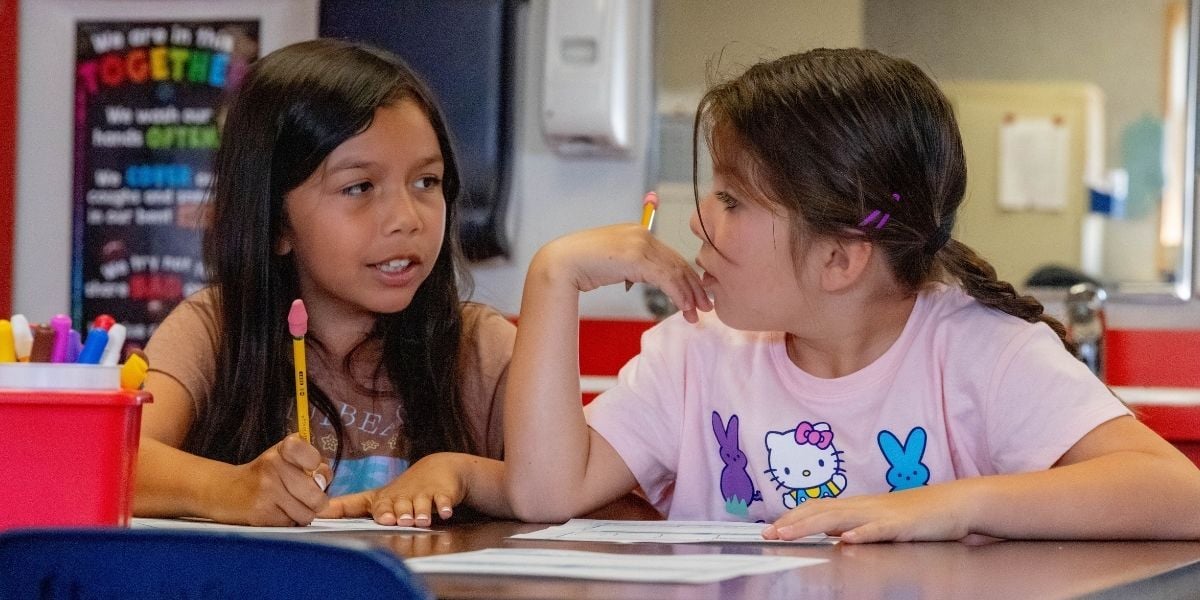
While many people think that before- and after-school programs are just babysitting, quality programs offer so much more.
A great before- and after-school program provides thoughtful caregivers and a safe environment where children can continue to learn, grow, and thrive. Strong programs can also help children succeed during the school day!
Ruby Sevilla, the Director of Educational Programs at Options for Learning, added that even with “great materials” or the “greatest technology,” strong programs really rely on expert teachers and on how they engage with children.
Whether it’s before, during, or after the school day, “Children need to feel safe in their environments in order to learn,” she shared.
Since 1981, Options for Learning has supported families in the San Gabriel Valley with affordable, exceptional early learning programs, including before- and after-school care.
Below, we debunk some of the most common before- and after-school myths, including:
1. Myth: “After-school programs are just babysitting”
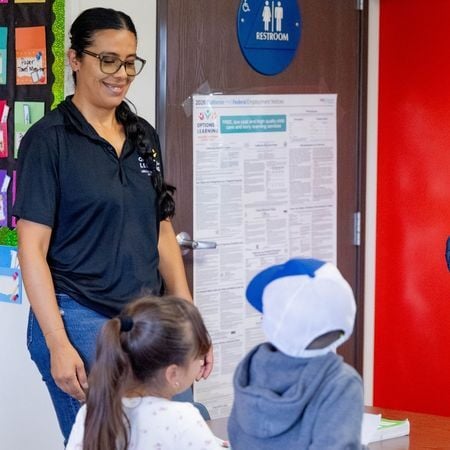 While after-school programs are a form of childcare, they offer so much more.
Quality after-school programs can complement the school day by helping children build social skills, confidence, creativity, and critical thinking through enrichment activities, STEM projects, art experiences, homework support, and opportunities to develop friendships.
An after-school program typically follows a more structured schedule than babysitting. For example, Options for Learning’s after-school programs’ usual schedule includes unstructured playtime, a short group reading activity, snack time, homework time, and another group activity.
To build even more relevant skills to what children are learning in the classroom, after-school program leaders collaborate with children’s teachers, particularly during homework time.
Everything in a quality after-school program serves an educational purpose, relying on project-based learning to support children’s learning.
“After-school programs are particularly good at project-based learning, bridging what children learn in school with real life,” An-Me, the program officer at the Charles Stewart Mott Foundation, previously shared with Scholastic.
Project-based learning is a teaching method in which students gain knowledge and skills by working over an extended period to investigate and respond to an authentic, engaging, and complex question, problem, or challenge. Examples could include nature and community projects, STEM projects, and life skills projects.
Ultimately, great after-school programs offer far more than babysitting. While staff help keep children safe and supported, there is also a strong focus on learning, exploration, and skill-building.
2. Myth: “Children spend the entire time doing homework”
Although some time in an after-school program is dedicated to homework time, children are also exposed to life skills, enrichment opportunities, and hands-on activities.
Some of these fun yet educational topics that children may focus on include:
-
Financial literacy
-
Example: Having a fire- and safety-themed month where children learn about how much fire extinguishers and smoke detectors cost
-
-
Learning about agriculture and gardening
-
Example: Researching a fruit or vegetable and participating in a hands-on activity, such as planting seeds or cooking
-
-
Antibullying
-
Example: Practicing teamwork, inclusion, and respectful communication through group activities
-
-
STEM and STEAM activities
-
Examples: Egg drop challenge, 3D art, and musical water glasses
-
A great part about after-school programs is the opportunity for children to extend their learning in individualized ways.
For example, a child who is struggling with a math concept in class gets a second opportunity to approach it differently with the help of their after-school teacher. For families, this support can also make evenings a little easier, as children may have an opportunity to complete homework and receive extra help before they’re picked up.
These experiences can help children feel more confident completing homework and participating in the classroom.
After-school programs show real results in learning: according to a2019 survey, 68% of students improved their homework completion and class participation, and 1 in 2 students improved their math and reading grades after attending after-school programs.
3. Myth: “Older children will not enjoy after-school programs”
 Many people see after-school programs as primarily for preschoolers, TK-age kids, or kindergartners, but older children also benefit from them.
While some after-school programs are mixed-age classrooms where children can collaborate with both older and younger students, others are age-specific. A quality program understands that children in different age groups have different academic, psychological, and physical activity needs.
More specifically, families with children in different age groups should look for programs that focus on specific topics and activities.
-
Children ages 5-10 should look for programs with:
-
Strong relationships with caring adults
-
Imaginative play and hands-on learning opportunities
-
Age-appropriate responsibilities and teamwork
-
-
Children ages 10-14 should look for programs with:
-
Leadership and decision-making opportunities
-
Community service and real-world experiences
-
Activities that build critical thinking and problem-solving skills
-
-
Children ages 14-18 should look for programs with:
-
Career exploration and college readiness opportunities
-
Work-based learning or volunteer experiences
-
Academic support and opportunities to develop independence
-
After-school programs have the potential to promote the social-emotional, behavioral, and physical health of economically vulnerable children aged 6 to 12
Several studies show that children of all ages benefit from after-school care, from elementary through high school, including a recent survey finding that high school students in after-school programs had greater expectations for the future than their peers.
Even on days when older school children may not want to attend an after-school program, teachers are there to guide them and help them feel like part of the community. Teachers include older children in certain responsibilities to make them feel needed and to see them as role models for younger children.
4. Myth: “Before-school care and after-school care is only for emergencies”
Yes, there may be times when you need somewhere for your little one to go after school, but before- and after-school programs are not just for emergency situations.
Before and after the school day, children still need stimulation, and being in a structured environment gives them the opportunity to build academic and social skills and strengthen relationships.
Additionally, having before- and after-school care allows parents to not rush to and from work. Children have time to recalibrate before school and unwind after school in a safe learning environment.
Even though there are certain cases where parents use the program once, if they get stuck in traffic or in an emergency, most students enrolled in before- and after-school programs are on a regular schedule.
5. Myth: “Before- and after-school programs are only for working parents”
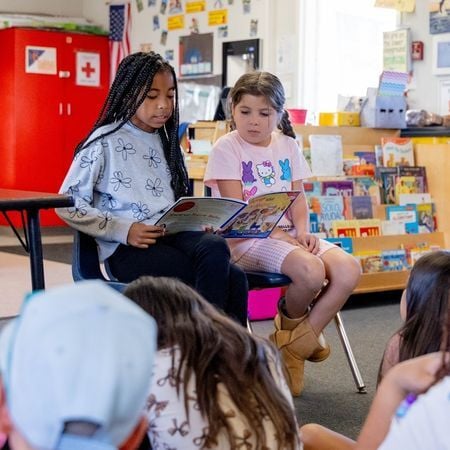 It may be common for children in before- and after-school programs to have parents who work outside the home, but that isn’t always the case.
For example, there are parents who are caring for elderly family members or are in school and need a longer school day for their children. There are also parents who want to build their children’s social and academic skills outside the classroom.
“For years, my son struggled with reading. The help and tutoring he’s received from his afterschool teachers has been immense,” Salt Lake City mom Amanda Owens wrote in The Salt Lake Tribune. “I cannot imagine how far behind in reading he would be without the after-school program. Now he’s no longer embarrassed to read. He even gets excited to read to his younger siblings!”
Are you interested in before- and after-school programs?
Whether you’re a working parent or just a parent who wants to build their child’s skills outside of the classroom, a before- and after-school program could be the right fit for you.
Before enrolling in a program, parents are encouraged to tour the facility and ask questions, such as:
-
What does a typical day look like?
-
How are children supervised and kept safe?
-
What kinds of activities do children participate in?
-
Is homework help available?
-
How do staff support friendships and social skills?
-
How do you communicate with families?
-
What training do staff members receive?
-
How does the program support children of different ages?
If you are interested in learning more about Options for Learning’s before- and after-school programs, connect with one of our education advisors to learn how we can support you and your family in the best way possible.
Frequently asked questions
Are meals and snacks provided in before- and after-school programs?
Many before- and after-school programs provide children with nutritious snacks during the program day. Families should ask specific programs which meals or snacks are included and whether dietary accommodations are available.
How do before- and after-school programs keep children safe?
 Quality programs prioritize safety through active supervision, attendance tracking, staff training, and established procedures for drop-off, pickup, and emergencies. Parents should ask how children are supervised throughout the day and how staff account for every child.
Are before- and after-school programs only offered during the school year?
Some programs also offer care during school breaks, minimum days, holidays, and summer sessions. Availability varies by program, so families should ask about year-round options when enrolling.
