
As a parent and caregiver, you know what it is like to constantly worry about your little one.
Those concerns can feel overwhelming, especially if you are wondering whether your child is developing emotionally, socially, or academically at the pace you expected.
Whether it is a concern about your child not interacting with other children in a center-based program or taking longer to communicate, the first step is to seek help from a licensed professional as early as possible.
For 45 years, Options for Learning has supported families in the San Gabriel Valley in understanding the importance of early intervention when it comes to getting help for their child.
In this article, you will learn:
What is early intervention?
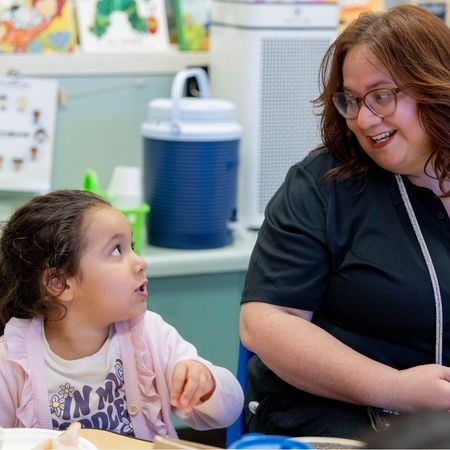
Maybe you have noticed that your child is reaching certain milestones differently from other children in their class, but you’re not sure what to do next.
You wonder, “Is it really that big of an issue?”
Researchers and professionals encourage early intervention so that children can receive support early and continue building important skills as they grow.
Early intervention refers to services for infants and toddlers with developmental delays and disabilities, such as autism and ADHD (Cleveland Clinic).
The goal of early intervention is for children to receive services as early as possible so they can gain the skills they’ll need for every aspect of their lives, from school to work to relationships.
Early intervention can include speech therapy, physical therapy, occupational therapy, family support, and other specialized services. These publicly funded programs are offered in every state and territory at no or low-cost to eligible children, per CDC guidelines.
For children in California specifically, state law allows parents and caregivers to request early intervention services if their child meets certain eligibility criteria (UCLA Health). The criteria include:
-
Developmental delays of at least 33% in areas such as thinking, motor skills, speech, or social development
-
Being at risk for a developmental delay or disability, such as a premature birth
-
Being diagnosed with a developmental disability such as cerebral palsy, autism, or Down syndrome
Early intervention is meant to provide children with the extra support they need, no matter how young they are — even if a problem has not yet developed.
What are the signs that parents or caregivers should seek early intervention for their child?
It can be difficult to notice when your child is struggling at home, which is why teachers and caregivers are often on alert for signs that a child may need early intervention.
For teachers and caregivers, signs that an infant or child may be at risk of a developmental delay or disability include:
-
Struggling to interact with other children in an age-appropriate way (e.g., sharing materials, being able to be aware of their surroundings with others)
-
Trouble with verbal or nonverbal communication (if they are unable to share their needs)
-
Delay in developing motor and self-help skills (e.g., being able to feed themselves)
-
Vision or hearing problems
-
Poor attention span
If you are still unsure about whether you should seek early intervention for your child, Options for Learning encourages families to check out the L.A. Care and Help Me Grow checklist of developmental milestones that children should meet at each age.
Some child care programs, including Options for Learning, also provide developmental and behavioral screenings to help jump-start early intervention.
Specifically, Options for Learning uses an Ages and Stages questionnaire to give teachers and caregivers an understanding of the child’s development and how it aligns with the child's age, helping identify any concerns they may want to address.
The screening assesses areas such as communication, social-emotional development, problem-solving, motor skills, and age-appropriate self-help skills to help identify strengths and potential areas where additional support may be beneficial.
How is early intervention helpful in the long run?
 Seeking help for your child as early as possible goes a long way!
In a 2026 Columbia University and New York City Health Department study, researchers discovered that children who received early intervention services between birth and age 3 outperformed their peers on third grade reading and math tests.
Options for Learning has seen this research come to life in their own classrooms.
Some children with behavioral issues who received early intervention are able to regulate themselves enough by the time they are 3 years old. They may no longer even qualify for services through their school district because they’ve made so many developmental gains.
While the success of early intervention is great for parents, teachers also feel rewarded when they tell a parent that their child no longer needs to be in a special day class.
Often, the goal for families is to have their child included in the regular classroom with other children.
Early intervention can help your child build the skills and confidence they need for future success.
What to do next if you think your child needs early intervention
If you believe that your child could benefit from early intervention, we have teams who can provide support.
Options for Learning’s Behavior Health and Wellness, Health Services, and Inclusion teams encourage families to discuss their concerns with a licensed professional or with their child’s pediatrician.
A professional can provide reassurance and help determine whether your child needs early intervention resources.
To discover a licensed professional or early intervention resources in your area, visit the CDC website to get started.
Options for Learning’s staff seek the best early intervention resources for a child. We work hand in hand with the family and the San Gabriel Valley community, including partnering with various organizations to ensure the best care.
If you’re interested in speaking with a member of our team or enrolling your child in an early learning program, we’d love to help! Please call 626-699-8070 to speak with an advisor.
We know it can be overwhelming to reach out to a professional for help when you still feel uneasy as a parent or caregiver. Those feelings are completely normal, but seeking support can help you better understand your child’s needs and connect your family with helpful resources.
