The decision between having your child learn at home or in a center at Options for Learning can seem overwhelming when you are trying to find a quality program that is affordable and works with your schedule.
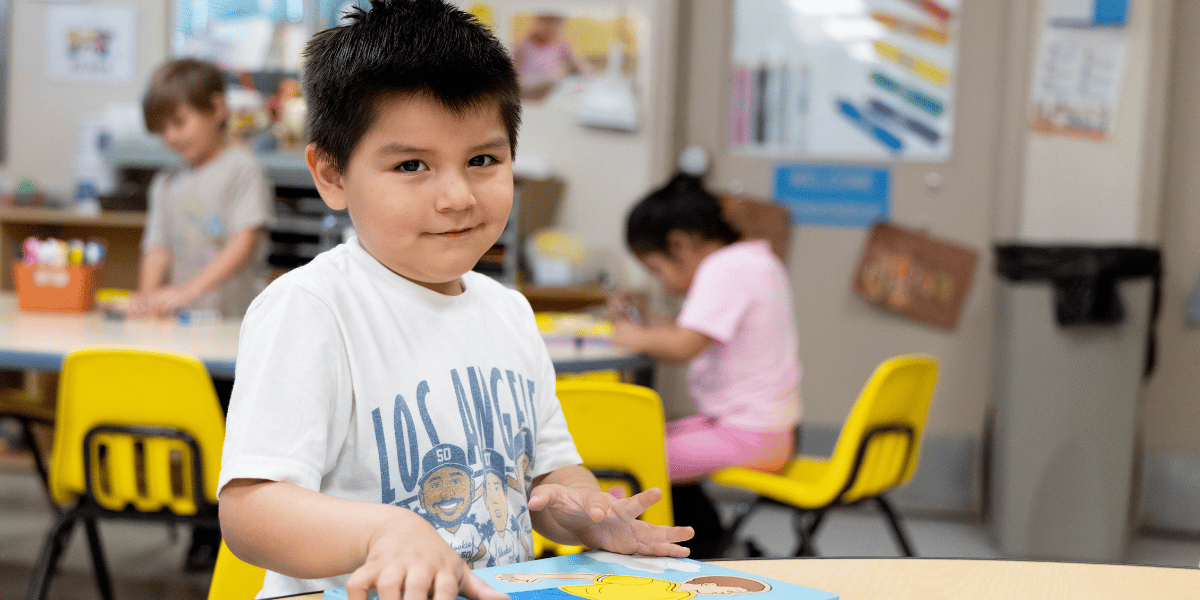
Center-based programs provide learning in a classroom setting with teachers and other students, while home-based programs bring the learning into your home, where parents and caregivers can actively participate alongside an educator.
Ultimately, the decision depends on how you feel your child learns best and how involved you want to be with your child’s learning.
With 161 classrooms across more than 65 locations throughout the San Gabriel and Pomona Valleys, Whittier, and northeast Los Angeles, Options for Learning provides affordable, high-quality early learning programs, including both center-based and home-based options.
Read on to learn more about:
Quick answer: Options for Learning’s home-based program is the best fit for stay-at-home parents, expecting parents, and families with children under age 5 who want personalized support and active involvement in their child’s learning. The center-based programs are best for families seeking a traditional classroom experience with daily routines, teacher-led learning, and regular interaction with other children.
What is home-based care at Options for Learning?
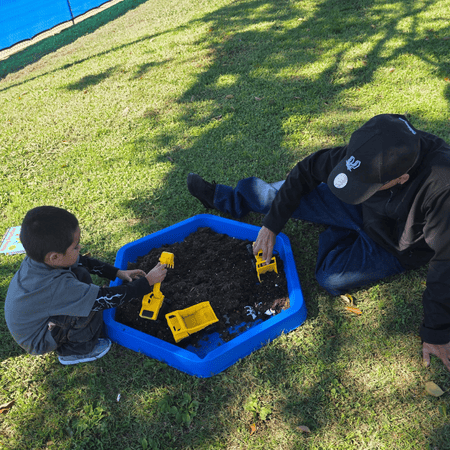 For children from birth to age 5, the home-based program at Options for Learning offers a more individualized, hands-on approach to learning. Families are paired with a parent educator who offers personalized support, learning activities, and guidance in the comfort of your home.
If you are enrolled in the home-based program, a parent educator comes to your house once a week for a 90-minute session with you, your child, and any other family members living in the home, including siblings and grandparents.
During these visits, learning takes place at home through household items, everyday routines, and activities tailored to your child’s specific developmental needs.
A typical visit includes:
-
A greeting and discussion of last week’s activities, or any new observations you have noticed
-
Completing a planned parent-child learning activity using everyday objects, e.g., a recognition of numbers activity with socks, markers, clothespins, and yarn
-
Planning for the following sessions’ activities and talking over an early childhood assessment called the Portage Guide 3
The activities are designed to support parents in serving as their child’s primary teacher.
Some examples of easy at-home learning activities that the parent educator might include are:
-
Making Play-Doh
-
Making cornstarch “ooze” with flour and baking soda
-
Balloon tennis with a paper plate, a popsicle stick, and balloons
-
Making faces on a paper plate
Additionally, Options for Learning’s year-round home-based program includes twice-monthly socializations, activities that take place outside the home with other participating families. These could be held in a park, a classroom, a library, or other locations around the community.
The program also serves expectant parents, allowing families to begin receiving support before their child is born. Parent educators can provide guidance, resources, and learning opportunities focused on infant development, family well-being, and preparing for a new baby.
The home-based program is free or low-cost for eligible families.
What is center-based care at Options for Learning?
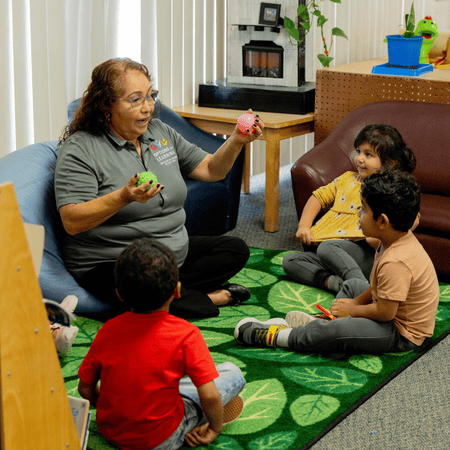 Options for Learning has 161 classrooms located at more than 65 locations throughout the San Gabriel and Pomona Valleys, Whittier, and northeast Los Angeles.
These centers, which are open year-round, include:
-
Infant and toddler care (0 to 36 months)
-
Preschool programs (ages 3 to 5)
-
TK-age support (ages 4 to 5)
-
Before- and after-school programs located on elementary school campuses (grades TK through 8)
At the start of the day, children go over a visual schedule so they know what to expect and whether there are any changes.
“We do our meals, we do our outside time, our small-group and teacher-led activities,” Monica Velasquez, a preschool teacher at Options for Learning, said. “All the teachers are on the same page. We have our lesson plan. Everything’s up and ready to go.”
Since most young children learn through play, the center-based curriculum focuses on play-based learning, a child-driven approach that involves exploration, discovery, and problem-solving.
For example, during a summer preschool activity at Options for Learning, students learned about the ocean and water. They had water tables, cups, and other materials for filling with water and pouring.
“I was watching one of our early 3-year-olds the other day, and at the water table, she just kept filling, filling, filling,” Monica recalled. “It was something with the net. She kept looking at it because the water kept coming through it. And I said, ‘Well, what do you think is happening? The water doesn’t stay. What can we do differently?’ She found another cup and started figuring it out. It’s trial and error.”
The center-based program also includes free diapers and wipes, nutritious meals and snacks, potty-training support, and before- and after-school care.
All of Options for Learning’s programs are free or low-cost for eligible families.
What are the differences between home-based care vs. center-based care at Options for Learning?
Both home-based and center-based care at Options for Learning involve hands-on learning activities that help your child build the skills they need for future learning; however, they differ in several ways.
|
Home-based program at Options for Learning |
Center-based program at Options for Learning |
|
|
Learning environment |
Learning takes place in the family’s home |
Learning takes place in a classroom setting |
|
Frequency |
1 90-minute session per week in the home; 2 monthly socialization events |
All day care (weekdays), 12 months a year |
|
Cost |
Free or low-cost |
Free or low-cost |
|
Age range |
Expectant mothers, infants, toddlers, and children up to age 5 |
Infants, toddlers, preschoolers, and school-age children before- and after-school programs |
|
Teaching approach |
One-on-one, individualized learning tailored to the child and family |
Group learning experiences guided by early childhood educators |
|
Role of parents |
Parents actively participate and lead activities with support from a parent educator |
Parents partner with teachers outside of the classroom to support their child's learning and development |
|
Socialization |
Children connect with peers through twice-monthly socializations and field trip |
Children interact with peers daily through play and classroom routine |
|
Family involvement |
Siblings, grandparents, and other caregivers can participate in learning activities |
Family involvement occurs through events, conferences, and engagement opportunities |
|
School readiness |
Introduces classroom routines through socializations and guided activities |
Provides daily experience with classroom routines, transitions, and group learning |
|
Learning materials |
Uses household items and everyday routines as learning tools |
Uses classroom learning centers, educational materials, and group activities |
|
Best fit for |
Families seeking personalized support in the home, including expecting parents and families with young children |
Families seeking a traditional preschool experience with daily peer interaction |
Which option is best for your child?
 Whether the center-based or home-based option is right for you depends primarily on your child’s age and the kind of program they are looking for.
The home-based program is designed for expectant mothers and families with children starting from birth up to age 5. Meanwhile, the center-based programs are for children from birth up to 8th grade.
Per the home-based program staff at Options for Learning, the program is the best fit for stay-at-home parents, families with multiple young children, expecting parents, and families waiting for a center-based program.
The center-based programs are the best fit for families who are seeking a traditional classroom environment with daily peer interactions, structured routines, and a teacher-led learning experience.
What should you do next?
Now that you know how the two programs differ, your next step is choosing the program that is the best fit for your child.
While some families prefer the daily routines, peer interactions, and classroom experiences offered through Options for Learning’s center-based programs, others may benefit from the personalized support and flexibility of learning at home through a home-based program.
No matter what option you choose, at Options for Learning, families in the San Gabriel Valley have access to programs that meet children where they are and focus on building early academic and social-emotional skills.
Ready to learn more? Explore Options for Learning’s center-based and home-based programs to discover which option may be the best fit for your child.
If you are still deciding, the Options for Learning team can help answer questions about eligibility, enrollment, program availability, and the services offered in your community.
Frequently asked questions
Are Options for Learning’s home-based and center-based programs free?
Programs are free or low-cost for eligible families. Eligibility and availability vary by program.
Who qualifies for Options for Learning’s programs?
 Options for Learning serves expectant parents, infants, toddlers, preschoolers, TK-age children, and school-age children through a variety of programs. Eligibility depends on factors such as the child’s age, family circumstances, and program requirements.
Is there a waitlist for home-based or center-based programs?
Program availability varies by location and program type. Some programs may have waitlists, while others may have openings available. Families are encouraged to contact the enrollment team for current availability.