

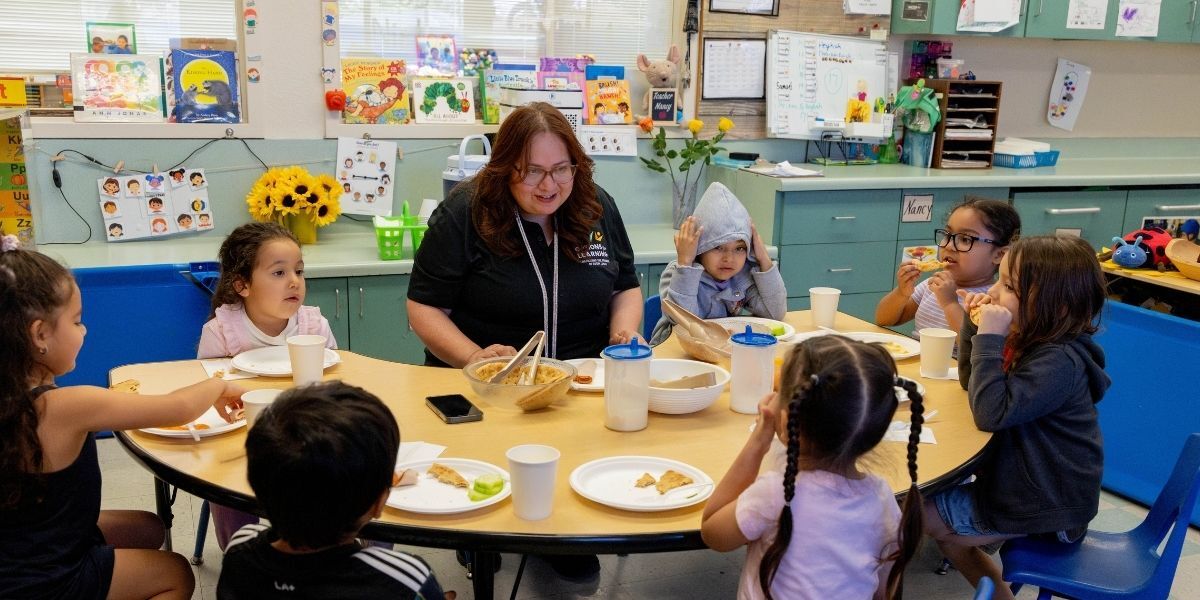
Most parents know that work schedules rarely align with school schedules. As you scramble to either take your child to school or pick them up, you’re not alone.
Since typical school programs start around 8 a.m. and end around 3 p.m., families who work a traditional 9-to-5 schedule may find it overwhelming to coordinate their child’s drop-off and pickup, which is why before- and after-school programs could be a great option.
A great before- and after-school program not only has a qualified caregiver to watch over your little one but also provides a supportive environment that reinforces what your child is learning in the classroom.
For more than 45 years, Options for Learning has served families in the San Gabriel Valley with affordable, quality early learning programs, including before- and after-school programs.
Keep reading to learn more about the most common questions asked by parents about Options for Learning’s before- and after-school programs, including:
1. How early can you drop your child off before school?
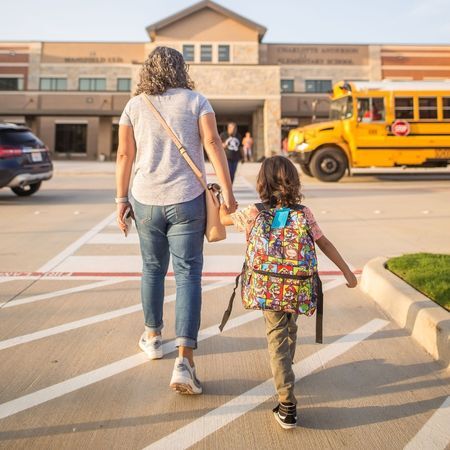 You want to know that your child has a safe space to go to before the school day starts, and isn’t just sitting by themselves waiting for school to open.
While various programs open at different times, Options for Learning opens at 6:30 a.m. and operates until children are walked over to their respective schools by their teacher, typically around 7:55 or 8 a.m.
Because schedules may vary by school site, families are encouraged to contact Options for Learning for specific program hours and availability.
2. What do children do in a before-school program?
Once you drop your child off at a before-school program, what do they actually do before the real school day starts?
Options for Learning’s students arrive between 6:30 and 7 a.m. and typically begin quiet-time activities such as books, puzzles, coloring, and block play.
Most children enjoy quieter activities because they are still waking up and preparing for the school day.
Not only does a silent classroom allow children to slowly wake up early in the morning, but it also benefits their cognitive development.
Studies show that too much noise, particularly loud noise, can hurt a child’s cognitive development. Since noise is distracting, providing a quiet environment for children helps their brains retain more knowledge during the school day.
After about 30 minutes of quiet time, children transition to open centers where they can be more creative.
While playtime in before-school programs is less structured than a regular school day, children are still learning important skills and developing their imagination.
“Child-driven, hands-on play is the foundation of creativity, constructive problem solving, and the capacity to self-regulate,” Susan Linn, a Harvard Medical School instructor in psychiatry and a research associate at Boston Children’s Hospital, shared in a previous interview. “They learn to experiment, and they learn that they have the power to make changes in their world.”
Building these skills prior to the school day helps children ease their way into the classroom, where things are more structured, and more is being required of them.
3. What happens when school gets out?
 Whether it’s part-day or full-day, Options for Learning’s after-school programs have more unstructured playtime, a group activity, snack time, and some time for homework help.
Since Options for Learning TK-age and kindergarten students get out earlier than the 1st through 5th graders, the younger children get picked up 30 minutes earlier and have 25 minutes of unstructured play before the older children arrive.
As they arrive in the classroom, children place their backpacks in their cubbies and wash their hands. Then, they participate in a short group reading activity while the teachers take attendance, which is crucial to maintaining a safe environment.
If staff are expecting a child and do not receive notice of an absence, they contact the school to verify whether the child was absent or left early.
Usually, after attendance is taken, children have 30 minutes of snack time followed by homework time. (At Options for Learning, we provide free, healthy snacks for all children in our programs.)
Homework time in the after-school program helps children complete their assignments and provides additional tutoring for those who need it. Whether it’s simply encouraging children or talking them through a problem, teachers want to create an engaging environment that doesn’t just feel like a tutoring session.
Programs typically end with a group activity, such as going outside together or playing group games.
Options for Learning’s dismissal is 6 p.m., with occasional days staying open until 6:30 p.m., depending on parents’ needs.
4. What happens on minimum days?
The short answer: Nothing out of the ordinary!
On school minimum days, when dismissal is earlier than usual, Options for Learning before and after-school programs have the same structure, except that children usually arrive an hour earlier.
Since children get out of the classroom earlier on minimum days, Options for Learning’s teachers incorporate more robust, hands-on group projects, such as STEAM activities, into the after-school program.
STEAM activities, which combine science, technology, engineering, the arts, and mathematics, could include:
-
Salt painting: drawing with liquid glue, sprinkling table salt over it, and dropping liquid watercolors onto the salt to watch how colors absorb, blend, and dry
-
Marshmallow and spaghetti towers: using mini marshmallows and dry spaghetti noodles to engineer the tallest or strongest freestanding structure possible
-
Sink or float experiments: testing different household objects in a container of water to predict and record which items float and why
5. Can your child attend only a before-school program, an after-school program, or both?
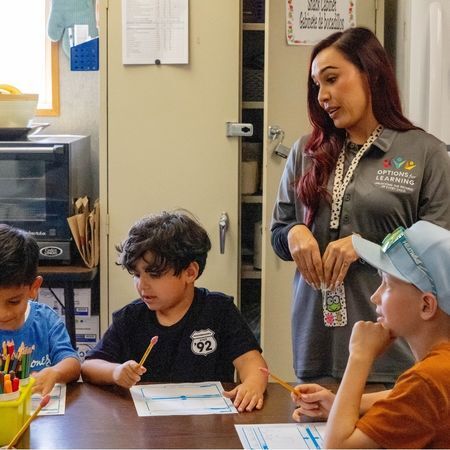 The Options for Learning enrollment specialist will come up with a plan for your child when your family joins the program.
While your family’s eligibility will be determined by your needs, Options for Learning allows flexibility for families to choose the program that meets their needs.
At Options for Learning, we want to be accommodating to your family and what you think is the best fit for your little one!
Next steps
At Options for Learning, our before- and after-school programs are designed to be both engaging and enriching for children.
Ultimately, a great before- and after-school program relies on having thoughtful caregivers and a safe environment where children can thrive.
“We can have all of the great materials and the latest and the greatest technology, but if the teachers are not engaging with children, they’re not going to thrive,” Ruby Sevilla, the Director of Educational Programs at Options for Learning, shared. “The children need to feel safe in their environments in order to learn.”
If you are interested in learning more about Options for Learning’s before- and after-school programs, connect with one of our qualified education advisors to learn how we can best support you and your family.
Frequently asked questions
How do children get from the before-school program to school?
Children are escorted from the before-school program to their school campus by staff. Because Options for Learning programs are located on school grounds, it’s a short walk to the school.
How are children kept safe in before- and after-school programs?
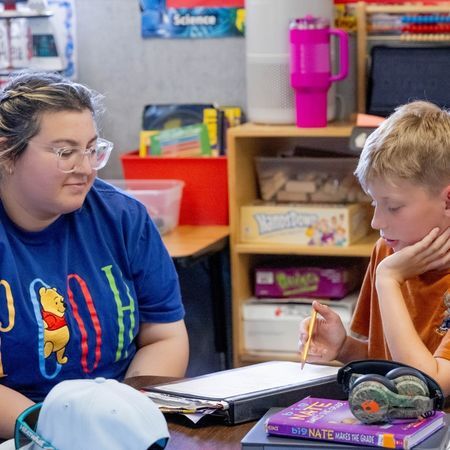 Children are supervised throughout the day. At before- and after-school programs, teachers take attendance and conduct frequent head counts to ensure they always know where children are. Safety and supervision remain a top priority during activities, transitions, and dismissal.
What makes a quality before- or after-school program?
Quality programs start with responsive, nurturing relationships between children and staff, according to Ruby Sevilla, Director of Educational Programs at Options for Learning. Engaging activities, homework support, nutritious snacks, and opportunities for social interaction also play an important role in a positive program experience.
