We know that it can be anxiety-inducing when it comes to enrolling your child in a preschool program for the first time.
You want to know that your kids are in a safe and supported learning environment with caring teachers. Sometimes it feels easier to turn to someone you already know instead.
Even if you’re worried about taking the next step, preschool is a great learning experience for your little one, and an important milestone!
Not only do preschoolers build on their academic foundations before kindergarten, but they also develop social-emotional skills that will last throughout their lives.
Since 1981, Options for Learning teachers have been helping children in the San Gabriel Valley with our immersive preschool program that focuses on building your child’s academic skills and social-emotional skills prior to kindergarten, all in a supportive and nurturing play-based environment.
With that said, we know you may still have reservations about sending your child to a preschool program, so we want to clear the air by debunking some common myths.
1. Myth: “My child needs to know their ABCs before they start”
Don’t worry, your child doesn’t need to know their ABCs before starting preschool.
Preschool programs are designed to introduce the ABCs and other academic concepts in ways that are age-appropriate and easy for children to understand. Through engaging play and curriculum, they may not even know that they’re being exposed to it!
Some common ways that preschool programs incorporate learning the alphabet into the curriculum are:
-
Making some letter blocks (putting the matching uppercase and lowercase letters next to each other)
-
Playing a game of letter i-Spy (have them point out whichever letter catches their eye!)
-
Playdough letter shapes
-
Alphabet song with actions
Many preschool programs, including those at Options for Learning, focus on helping children learn concepts rather than simply memorizing letters.
We want them to learn the purpose of letters by teaching the fundamentals and concepts of how letters work in counting. This approach builds a strong literacy foundation for success in kindergarten and beyond.
2. Myth: “My child is too shy for preschool”
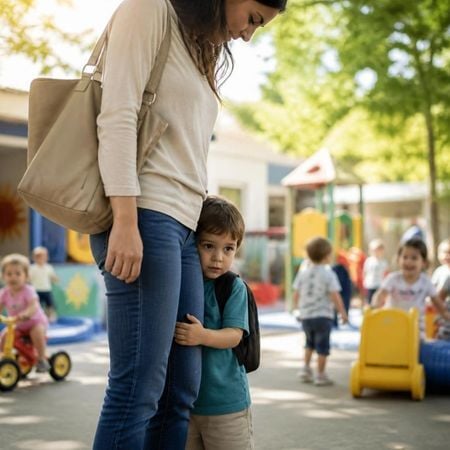 When your child struggles to communicate in group settings, we completely understand that your first instinct might be to have them avoid those environments. But by sending them to preschool, you’re allowing them the opportunity to grow!
A lot of kids are shy about starting preschool, and that’s completely okay and normal. Teachers adjust and adapt their approach to help your child thrive and feel comfortable.
“If they’re not comfortable with something, that’s fine. We just encourage, and we support,” Monica Velasquez, a teacher at Options for Learning, shared. “Honestly, by the end of the school year, you’re going to see how your child blossoms and are not going to be shy!”
Some ways that parents and teachers can better support shy children are by:
-
Making them feel safe in the environment
-
Avoid labeling the child as “shy” in front of them or other children
-
Gradually exposing them to social situations (introducing themselves, asking to join games, ordering their own snacks, etc.)
At Options for Learning, teachers understand that every child has a different personality. Rather than pushing shy children into social situations, they help them build confidence at their own pace through supportive relationships, group activities, and play-based learning experiences.
3. Myth: “If my child cries, they are not ready”
It is completely normal for your child to cry at drop-off or during the day, but that doesn’t mean they are not ready for preschool.
If a child cries, that usually means that they are experiencing separation anxiety, especially after they are in a new environment without you. It’s just somewhere new that they need to get used to, and crying is normal.
It’s kind of like when you’re starting a new job. Those anxious feelings start to creep up, and sometimes it’s difficult to sleep the night before. But that doesn’t mean it’s bad! It just means you have to build that confidence up.
In preschool programs, including Options for Learning’s programs, teachers have many approaches and techniques to help your child feel more comfortable and calm.
For example, children may bring a favorite stuffed animal, family picture, or toy to school to remind them of home.
“I tell [parents], I would never let a child cry all day. And they don’t,” Monica explained. “They go, and within five minutes, they’re usually done crying. It’s just that first little bit.”
4. Myth: “Preschool is just babysitting”
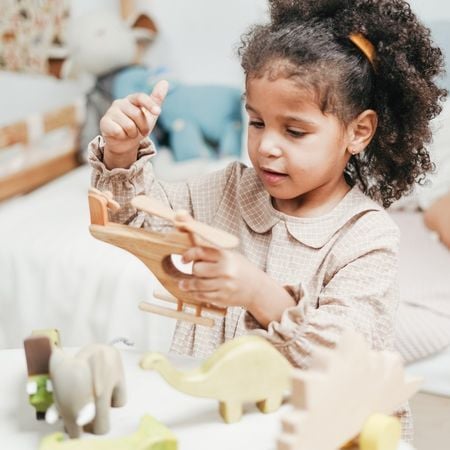 Some people believe that sending your child to preschool is basically just having a babysitter watch them for several hours a day. However, preschool programs are actually so much more than that.
“Although we do care for a child and we make sure your child is safe and healthy, they are also learning the whole day,” Monica explained. “They’re learning from the minute they walk into the classroom. We provide a program filled with materials and a curriculum that constantly supports the child’s interests.”
In preschool, children are learning different academic and social skills, including:
-
Transitions and a schedule
-
Independence
-
Socialization with their peers
-
Spatial awareness and gross motor skills
-
Learning how to follow directions
-
Absorbing language
-
Health and safety
-
Problem solving
-
Social hygiene
These skills help prepare children for kindergarten by teaching them how to follow routines, communicate with others, solve problems, and develop independence. Together, these experiences build the foundation for future academic, social, and emotional success.
5. Myth: “Preschool is only a few hours a day”
Even though many preschool programs are only a few hours a day, some provide all-day programs. No matter the length of your preschool day, those hours are rich and meaningful to a child when they are learning so much new knowledge.
“It’s a routine. It’s consistency that children learn,” Monica said. “They’re getting so much in those hours.”
Monica noted that it’s also important to involve parents and guardians “right away” to continue learning at home.
“When our parents come in, we tell them to take a picture of the routine so they know what we do,” she explained. “Often parents will say things like, ‘Wow, you guys do so much in the time.’ You’re going to see that your child is going to be able to do and follow all of that.”
Also, while several preschool programs run only a few hours a day, others, including Options for Learning, offer longer hours.
These programs offer full-day options for working families, allowing your child to spend even more hours absorbing knowledge and lessons. During full-day programs, children are given snacks, meals, and time to rest.
6. Myth: “Preschools close during the summer”
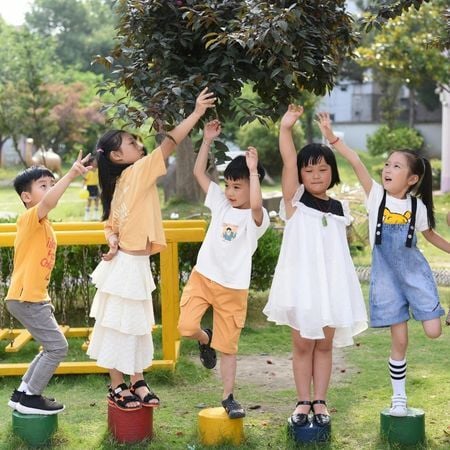 Although some preschool programs are closed during the summer, other schools, such as Options for Learning, offer year-round support for children.
“It helps the parent with their work or school, but also, teachers can see a child’s growth and their confidence rise up throughout the year so much faster in a year-round program,” Monica said.
During the summer, Options for Learning and other programs work hard to create engaging, fun units with special visitors.
For example, this summer, in the year-long preschool program at Options for Learning, children are learning about the ocean and the science of flight. In their ocean explorations, they’re learning about ocean zones, waves, and tide pools through creative discovery activities. To learn about the science of flight, preschoolers are learning simple aerodynamics (lift versus gravity) and engaging in hands-on flying projects.
If parents have concerns about booking family travel plans during a year-round program, Monica encourages families to know that this is perfectly fine as long as they communicate with the teachers.
7. Myth: “My child won’t benefit because I’m already teaching them at home”
Parents and caregivers are children’s most important teachers! Yes, your child is learning at home every day. The benefit of preschool is that children can get important social interaction with peers their age that they may not otherwise have.
Many siblings have a large age gap, so interactions are very different from those with classmates of their own age.
Preschool programs are where children learn how to share, socialize, and work cooperatively, and all the skills they need when they go to kindergarten.
The younger you enroll your child, the more skills they’ll learn!
What’s Next?
Now that you know the truth behind these common preschool myths, the next step is finding a program that aligns with your child’s needs, personality, and learning style. As you explore your options, look for a program that offers qualified teachers, a safe environment, and opportunities for play-based learning.
If your family is looking for an affordable preschool program in the San Gabriel Valley, Options for Learning is here to help support you and your child.
For children ages 3 to 5, Options for Learning’s preschool programs are designed to set your children up for success in kindergarten.
Options for Learning’s preschool program include:
-
Proven curriculum with credentialed teachers
-
A nurturing play-based approach to make learning fun
-
Guidance and referrals for health, vision, hearing, and developmental screenings
-
Dental and mental health support connections
-
Nutrition education and healthy meals and snacks are provided daily
-
Parent education workshops and family engagement events
-
Dedicated family advocates to connect your family with resources
-
Opportunities for parent involvement, leadership, and advocacy
-
Support for families whose children have special needs and can benefit from support in the classroom
To get started with the application process, we encourage families to complete a brief form, and one of our education advisors will be in touch within 72 hours.
If you have any more questions about Options for Learning’s preschool program, feel free to reach out at 626-699-8070. We want to help your child in the best way we can!
