Wow, does the school year go quickly! Before you know it, it’s summer. Or winter break. Or spring break! And that means figuring out what your children will do while you work.
It can be overwhelming to coordinate a babysitter or plan a camp for your little one, but what if they could just stick to their normal school schedule all year?
A year-round schooling model, also known as a “balanced calendar,” typically operates on a 180-day schedule and incorporates more frequent breaks throughout the year, with a shorter summer vacation.
While you might be used to the traditional summer break, a year-round program offers potential benefits such as a more consistent routine and fewer extended interruptions to learning.
With the benefits of year-round schooling come potential downsides, such as reduced flexibility during the summer.
For 45 years, Options for Learning has provided year-round programs and services for families in the San Gabriel Valley. Through this work, we understand the important role that consistency, routine, and reliable care can play in supporting children and families year-round.
In this article, you’ll learn about some of the potential benefits and considerations of a year-round school schedule, including:
Pro: Helps parents with their work or school schedule
 Aside from benefiting your child, a year-round schooling program is equally beneficial to you! If you work, attend school, or have other responsibilities, it can be helpful to know your child has a consistent place to learn and grow throughout the year.
For some families, a year-round schedule can reduce the need to find temporary summer child care, camps, or other arrangements during long school breaks. It can also provide greater consistency for children and caregivers, since families do not need to transition regularly between care settings throughout the year.
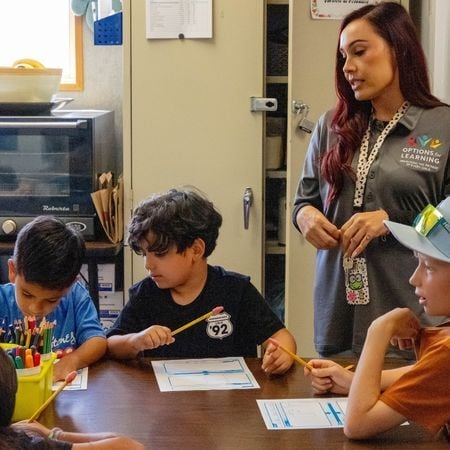
Monica Velasquez, a preschool teacher at Options for Learning, shared that she has seen that having the preschool program run through the summer allows kids to extend their learning, and parents do not have to pay for extra support.
“If we’re here, they don’t have to pay for babysitters or summer camps while they’re working,” Monica explained. “With us, they’re getting qualified, educated teachers. We also have our CPR certification. I think it’s comfortable and convenient for families because. They don’t have to go through the process of another enrollment.”
Pro: Learning and routines continue throughout the year
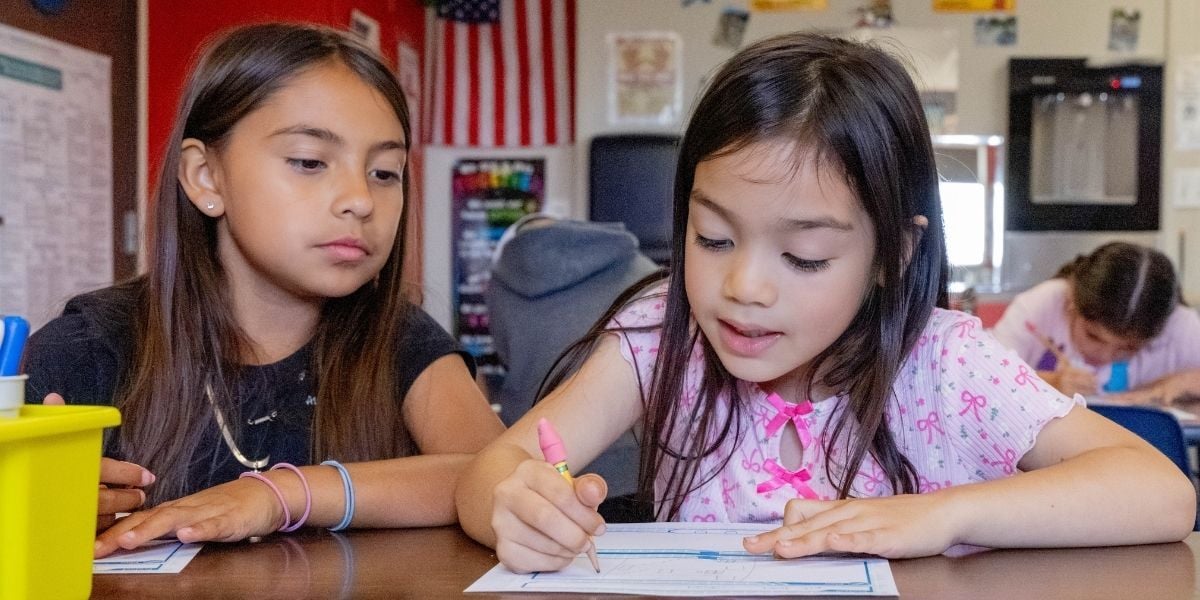
Sometimes, with a regular school schedule, children can fall behind over the summer, and it can take time for them to catch up across all subjects. With a year-round schooling program, children are constantly learning, and there is no pause in their typical routine.
The “summer slide,” or summer learning loss, is a common phenomenon where students experience a decline in academic performance during long breaks.
According to a 2020 study, children in grades 3 to 5 lost, on average, about 20 percent of their school-year gains in reading and 27 percent in math during summer break.
Although children are still learning at home over the summer, it isn’t the same as their classroom experiences, particularly in terms of socialization and academic skills.
Plus, since younger kids are still in the early stages of development, they are more prone to learning loss. “In general, kids learn a lot more in kindergarten, first grade, and second grade than kids in middle school or high school, because learning follows a curve where it’s accelerated early in life and then plateaus,” James Kim, Ed.D., an assistant professor of Harvard University, shared.
This challenge can be particularly significant for low-income families, who may have fewer opportunities to access summer learning programs and enrichment activities.
One reason some families choose year-round programs is to reduce long interruptions in learning and provide children with more consistent opportunities to practice and build new skills.
Because children spend less time away from the classroom, they may find it easier to maintain familiar routines and transitions back into learning after breaks.
Beyond academics, consistent routines can help children feel more comfortable and confident in their learning environment.
“I see their growth, and I see them become more confident,” Monica Velasquez, a preschool teacher at Options for Learning, said.
Con: Long vacations may require more planning
 While there are breaks throughout the year, being enrolled in a year-round schooling program could mean less time for extended breaks or vacations.
The summer is usually when families can travel, and there may be conflicts with relatives who follow a traditional school calendar.
As a result, some families may need to be more flexible when planning trips, camps, or family gatherings throughout the year.
For families enrolled in year-round programs, vacation plans may require additional communication and coordination.
“They can still do that as long as they communicate with us, and then they can come right back in, and we’re still here,” teacher Monica Velasquez shared. “Their child is never going to get dropped.”
Con: Extracurricular activities may not align
Some parents may be concerned that a year-round school schedule will make it difficult for children to participate in their usual extracurricular activities, such as camps, sports leagues, and community programs.
Since many of these activities are based on a traditional school program, it may be more challenging to find places that are flexible and can accommodate your child’s year-round school schedule.
Even if some options are unavailable, there are still many activities your child could participate in; you may just need to research what would work best for your family.
Interested in joining Options for Learning’s year-round program?
 Every family has different needs, and the right schedule depends on what works best for your child and family. If you are looking for a year-round school option for your child in the San Gabriel Valley, Options for Learning offers year-round support for infants, toddlers, preschool and TK-age children, and K-8 children. Our goal is to provide flexible options, caring educators, and supportive learning environments where children can learn, grow, and thrive.
If you’re interested in learning more about Options for Learning’s year-round school options, fill out this short form, and one of our education advisors will be in touch to find the best fit for you and your child.
Frequently asked questions about year-round school programs
Is year-round school the same as attending school for more days?
No. Most year-round schools follow a 180-day academic calendar. The difference is that breaks are spread throughout the year rather than a single long summer vacation.
Do children still get summer breaks?
Yes. Year-round schedules typically include shorter breaks throughout the year, including a shorter summer break.
Can families still take vacations?
Yes! However, families may simply need to plan trips around the school’s calendar and any program attendance requirements.
Is a year-round school schedule right for every family?
Not necessarily. Some families appreciate the consistency, while others prefer a longer summer break for travel, camps, or family activities.
