
You’re trying to work from home while your toddler is screaming in the next room, before it finally hits you — maybe it’s time to seriously consider toddler care. You turn to Google but are quickly bombarded with thousands of resources. You may not know where to begin and whom to trust.
Choosing the right toddler care option for your little one can be an overwhelming process for parents. From center-based early learning programs to Family, Friend, and Neighbor (FFN) care, each option has a lot of information to break down.
Since 1981, Options for Learning has been helping families choose the best toddler care programs that uniquely fit each child.
In this article, you will learn:
- The different types of toddler care programs, including:
- Next steps in choosing a toddler care program
What does toddler care mean?
Toddler care refers to early learning support for young children (typically ages 1-3) in a supervised environment outside the home or provided by another caregiver. Ultimately, toddler care is designed to meet children’s developmental, emotional, and basic needs while supporting family needs.
When it comes to toddler care options, there are several to choose from, including center-based child care, family child care, care provided by family, a friend, or neighbor, nannies, and the Early Head Start program.
Center-based child care (early learning programs)
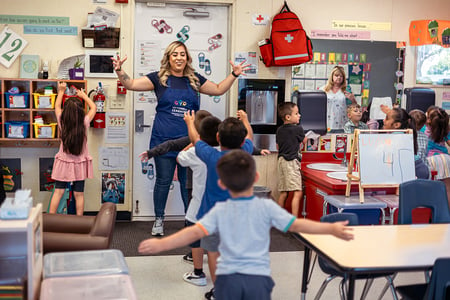
Center-based early learning programs offer a more structured, school-like environment compared to other toddler care options.
In these programs, children are cared for in larger group settings, typically separated by age or developmental stage. Classrooms follow a consistent daily routine, which may include:
-
Group activities like circle time or story time
-
Structured play and learning centers
-
Scheduled meals and nap times
-
Outdoor play and movement activities
Teachers and classrooms are required to meet state licensing regulations, including specific child-to-teacher ratios, and follow a set curriculum designed to support early learning and development.
Compared to home-based care, center-based programs tend to feel more like a traditional classroom setting, with clear schedules and expectations throughout the day.
This option can be especially helpful for families who are looking for a consistent daily schedule and opportunities for their child to interact with other children of the same age. Because of the group setting, toddlers begin building early social skills like communication, sharing, and cooperation.
Family child care (home-based care)
Instead of going to a center, family child care takes place inside a licensed provider’s home. These are usually smaller, mixed-age group settings depending on state licensing requirements.
Family child care offers a more home-like environment, where children of different ages may learn and interact together. This setting often allows for more one-on-one attention and can feel more personal and familiar for young children.
Mixed-age environments can also benefit children by allowing younger toddlers to learn from older peers, while older children develop confidence by modeling behavior.
In addition to smaller group sizes, family child care programs may offer more flexible hours than centers, which can be especially helpful for families with nontraditional work schedules or those needing extended care.
Family, friend, and neighbor care (FFN — or license-exempt care)

Family, friend, and neighbor care is toddler care provided by someone the family already knows:
-
A relative
-
Friend
-
Neighbor
Unlike family child care, this option is usually exempt from licensing. Families typically identify these caregivers on their own, though agencies may offer guidance and resources.
One of the main benefits of this type of care is familiarity, as children are being cared for by someone they already know and trust. This can make transitions into care feel easier for both the child and the parent.
Families can also use Trustline as an important tool for selecting a caregiver for their children. Everyone in the Trustline database has submitted their fingerprints to the California Department of Justice and has no criminal convictions.
Nannies
Similar to family, friend, and neighbor care, families also have the option to hire a nanny for toddler care in the child’s home.
This is typically one-on-one care; however, it can sometimes be in a shared setting, depending on the nanny’s personal preference.
With a nanny, families often have more control over daily routines, including naps, meals, and activities that align with the child’s schedule
Background checks through the website Trustline are highly recommended.
Early Head Start program
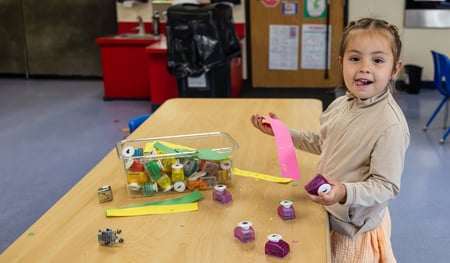
The Early Head Start program is federally funded, and families must qualify for the program. Eligibility is generally based on federal poverty guidelines, with priority given to families experiencing homelessness, providing foster care, or receiving public assistance.
Visit the California Department of Developmental Services website to find agencies in your area or to explore Head Start eligibility requirements and tools online (such as an eligibility calculator) to determine whether you qualify.
In addition to center-based care, most Head Start programs offer a home-based option, where a teacher visits the family regularly before transitioning the child into a classroom setting.
Next steps in choosing a child care program
Choosing toddler care is a big decision — but understanding your options is the first step.
By visiting programs, asking questions, and exploring available resources, you can confidently choose the care that best supports your child and your family.
Need help finding the right toddler care program? Our resource and referral specialists can help you explore licensed providers, understand your options, and connect with programs that fit your family’s needs. Contact Options for Learning at 626-699-8070 today to get started.
