

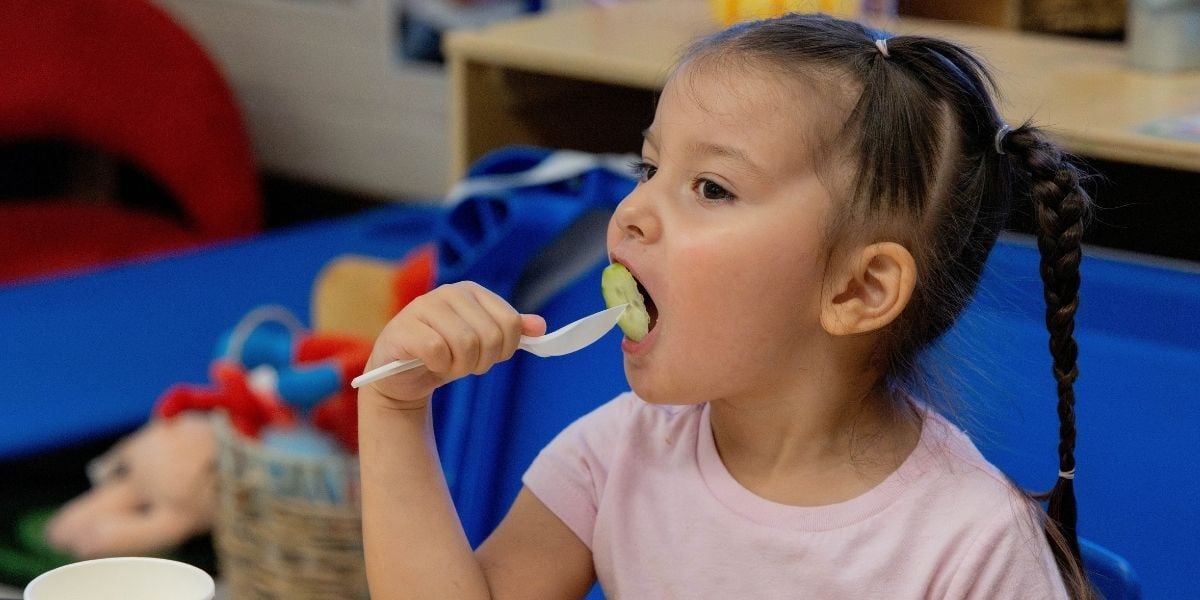
You’ve tried everything to get your child to eat the meals you give them, but nothing seems to be working. You think to yourself, “What can I possibly do to get them to eat one vegetable?”
Even if it can be frustrating, it’s completely normal for children to be picky eaters, especially when they are young and are still figuring out what they like and dislike.
As you work together with your child and maybe even a teacher or pediatrician, you will come up with a nutrition plan that is the best fit for your little one.
Nutrition is the foundation for education because without a proper meal, students can’t fully focus on learning.
For more than 45 years, Options for Learning has supported children and families across the San Gabriel Valley with early learning programs and educational resources, including nutrition services for home-based and center-based programs.
Read on to learn more about:
-
Why picky eating is a common challenge
-
Tips to help your picky eater, including:
-
Introduce new foods in small portions with foods your child already enjoys
-
Establish consistent mealtimes
-
Arrange fruits and vegetables in a visually appealing way
-
Avoid pressuring your child to eat
-
Get your child involved in preparing meals
-
-
How to know when picky eating becomes a problem
Why picky eating is a common challenge for children
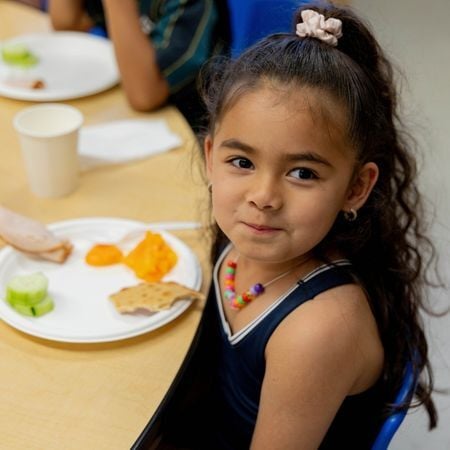 Like many parents, my son is a picky eater! It can be really difficult – but know that you’re not alone if your child is picky too.
Studies estimate that anywhere from 6% to 50% of children might be picky eaters at some point, most commonly between ages two and six. For many, it improves by age seven, but in others, it persists in adolescence or adulthood.
While there is no single proven reason why children become picky eaters, there could be some key factors that may cause it, including:
-
Early feeding difficulties
-
Late introduction of lumpy foods at weaning (the transition from milk/formula to solid foods)
-
Pressure to eat
-
Early choosiness, especially if the mother is worried by this
Sometimes, picky eating could also just depend on your child’s culture or the environment they are raised in.
The good news is that if your child is a picky eater, there are ways to help them expand their palate at home.
Top 5 tips to help your picky eater
1. Introduce new foods in small portions with foods your child already enjoys
One of the main tips given to me to help my son with his picky eating is to put the items he enjoys most on his plate, along with a small portion of the “new” food.
In the four quadrants of the plate, the majority of the plate, or two out of four quadrants, should be food that your child likes. The remaining two quadrants can be foods that are less familiar. One of which should be a food they like but may not eat all the time. The smaller quadrant should be a new food that you think they might enjoy.
For example, if your child likes apples and rice, somewhat likes grilled chicken, but hasn’t tried carrots, you can place apples and rice in the two large quadrants, followed by grilled chicken and carrots in the two smaller quadrants.
To separate the plates into quadrants, researchers recommend using a segmented plate with pictures designating the fruit and vegetable compartments.

According to a 2018 study, children using segmented plates served themselves 47% more vegetables and ate 37% more vegetables than when using just a regular plate.
Any new food introduction should be a smaller portion on the larger plate of items they mostly like. That’s usually how to get a child to become more open and accustomed to trying new foods.
2. Establish consistent mealtimes
Whether it’s getting ready for bed or sitting down for lunch, structure and routines are important for children.
“When children have consistent routines, they often feel more confident because they know what comes next,” Evelin Rivera, a Parent Coach at Options for Learning, explained.
If your child is in an early learning program, such as Options for Learning, there are set lunch and snack times so children get used to eating at set times.
Having a set time at both home and school can help your child know when to expect to eat and develop a more regular cycle of feeling hungry and full.
For young children, visual schedules with pictures can also be a helpful tool, especially when they may not yet have the language skills to fully understand verbal instructions.
“Simple routines and visual schedules can help children build independence while making daily activities more predictable,” Rivera shared.
Additionally, try to schedule family mealtimes to make your child feel more included and supported in trying new foods.
In a 2016 study, researchers found that within a group of 75 mothers of children aged between two and four years old, children whose mothers ate with them and ate the same foods were observed to refuse fewer foods and were easier to feed.
3. Arrange fruits and vegetables in a visually appealing way
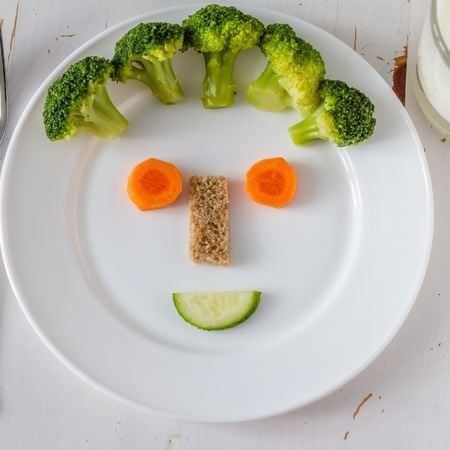 Sometimes children can feel overwhelmed when they’re introduced to a food with a new texture or color, which is why it can be helpful to have some fun with how you present it!
Whether you decide to make a smiley face out of carrots with broccoli eyes or their favorite animated character, your child might enjoy seeing something they love on their plate.
Silly faces, a rainbow plate, a veggie train, a mini forest of broccoli, or different fruit shapes are all great ways to get your child more into what they are eating.
4. Avoid pressuring your child to eat
It can be stressful when your child throws a fit when you try to get them to eat their meal, but you shouldn’t force it on them.
While it’s okay to encourage your child to eat, they may be more willing to keep trying foods if mealtimes don’t become a battle.
Instead of pressuring your child to eat, try offering gentle encouragement. For example, you might say:
-
“Would you like to try one bite?”
-
“You don’t have to eat it, but you can touch it, smell it, or tell me what you think about it.”
-
“This food is new. Sometimes it takes a few tries before we decide if we like something.”
-
“Can you tell me what you notice about the color, smell, or texture?”
-
“I like how you were willing to try something new today.”
These types of conversations can help children feel more comfortable exploring new foods without turning mealtimes into a power struggle.
“Making a child sit at the table until her plate is cleaned is not the best way to get them to eat,” Dr. Rachel Busman, PsyD, ABPP, previously explained to the Child Mind Institute.
Pressuring your child can sometimes feel like punishment to them and cause more tension than help them overcome their picky eating.
As long as your pediatrician says your child is healthy and they continue to eat a variety of foods, it’s best not to force them to eat every vegetable on their plate.
5. Get your child involved in preparing meals

If you’re in the kitchen, why not have your child come in and help you?
Whether they help you cut food, prepare their meals, or even just watch you cook, it could make them more inclined to want to eat it.
Instead of having them in a separate room, having them in the same room while you’re cooking will encourage them to try what you’re making.
A 2014 study showed that not only does having your child involved in meal prep increase vegetable intake, but children involved in the cooking process also reported significantly increased feelings of positivity and a sense of control.
Some great ideas to get your children involved in preparing meals include:
-
Washing produce
-
Stirring ingredients
-
Playing with plastic cups
-
Measuring dry ingredients
-
Peeling oranges
-
Shaping dough
-
Setting the table
-
Cutting soft foods with a dull knife
-
Cracking eggs
How to know when picky eating becomes a problem
So now that you know picky eating is normal, you may still be wondering when picky eating becomes something you need to take more seriously.
Picky eating becomes a serious problem when kids are undernourished or eating so little that it severely limits their lives. For example, some parents might realize that their child used to be a great eater, but now won’t eat anything.
Some signs that you should talk to your pediatrician about picky eating are:
-
Extreme food selectivity
-
Food refusal
-
Limited appetite
-
Poor weight or failure to gain weight
-
Delayed or dysfunctional eating skills
-
Disruptive mealtime behavior
-
Eating differently in different environments
-
Negatively impacting family functioning
While there might be several reasons children might struggle with picky eating, like OCD or anxiety, there is nothing wrong with talking to a pediatrician, licensed professional, or teacher about any of your concerns.
Looking for more nutrition resources?
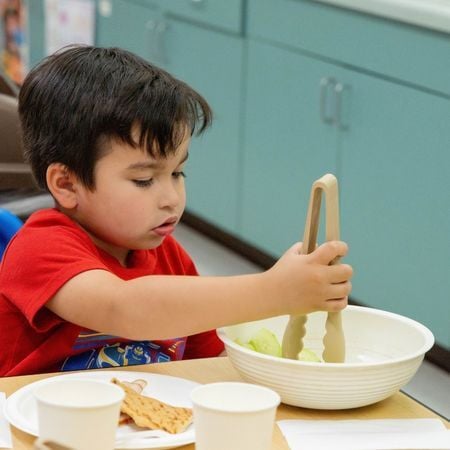 Nutrition plays an important role in children’s growth, development, and readiness to learn.
At Options for Learning, children receive healthy meals and snacks at no cost, along with age-appropriate portion guidance, healthy recipes, nutrition education, and resources that help families model healthy eating habits at home.
Your child deserves to be nourished, energized, and ready to learn! Connect with an education advisor to explore more about what Options for Learning’s Nutrition program has to offer.
Frequently asked questions
How long does it take for a child to accept a new food?
Every child is different. Some children may try a new food right away, while others may need multiple opportunities to see, touch, smell, or taste a food before they feel comfortable eating it.
Should I make a separate meal if my child refuses to eat dinner?
 Many children go through phases of picky eating, but consistently preparing a separate meal can make it harder for them to become comfortable with new foods. Instead, consider serving at least one familiar food alongside the family meal so your child has something they recognize while still being exposed to new options.
How can child care programs and families work together to encourage healthy eating habits?
Consistency can help children develop healthy eating habits. Families can support what children learn in child care programs by offering a variety of foods at home, encouraging children to participate in meal preparation, and maintaining regular mealtimes. Open communication between families and educators can also help create a positive experience around food.
