As a parent with a child approaching kindergarten age, you’ve probably heard the term Transitional Kindergarten (or TK) thrown around and thought to yourself, “What does that even mean?”
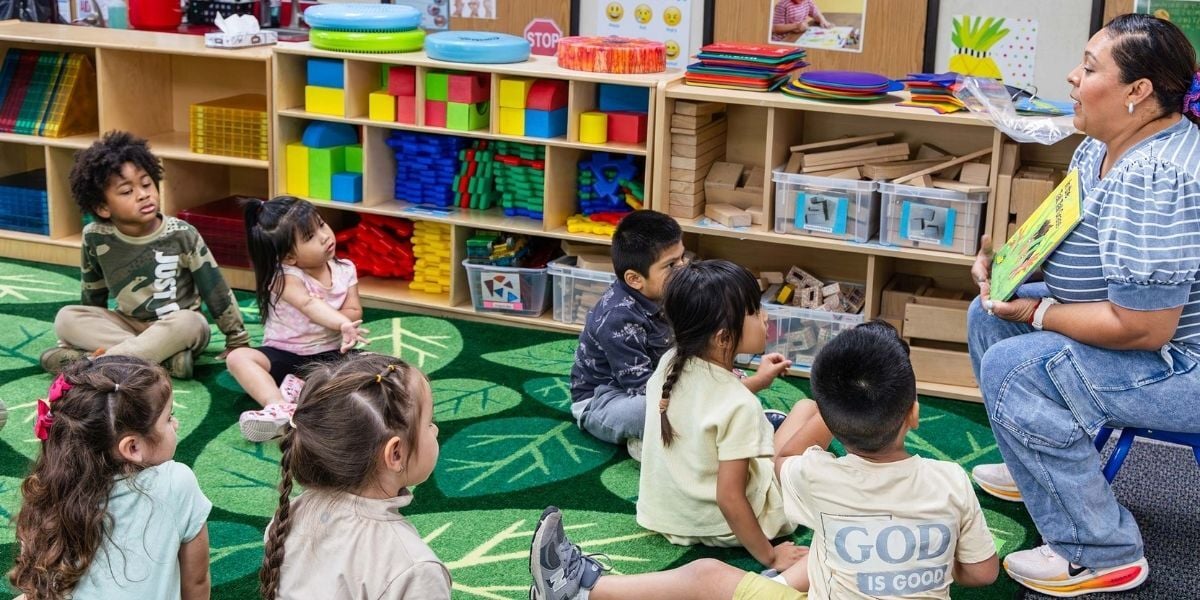
TK is a two-year kindergarten program offered by elementary schools for 4-year-olds. In a kindergarten classroom, children become familiar with school routines, learning environments, and foundational academic concepts.
Although TK is similar to preschool in that it has structure and has play-based learning, preschool differs in that it focuses more on a child’s early social-emotional development.
While preschool and TK are both early education programs for your little one, they differ in their structure, eligibility requirements, learning approaches, and overall goals.
There are several options for your 4- or 5-year-old’s education and care, and we want to make sure you are informed about them!
In this article, you’ll learn:
What is preschool?
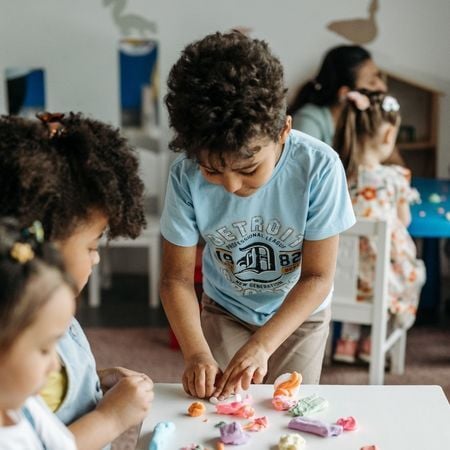
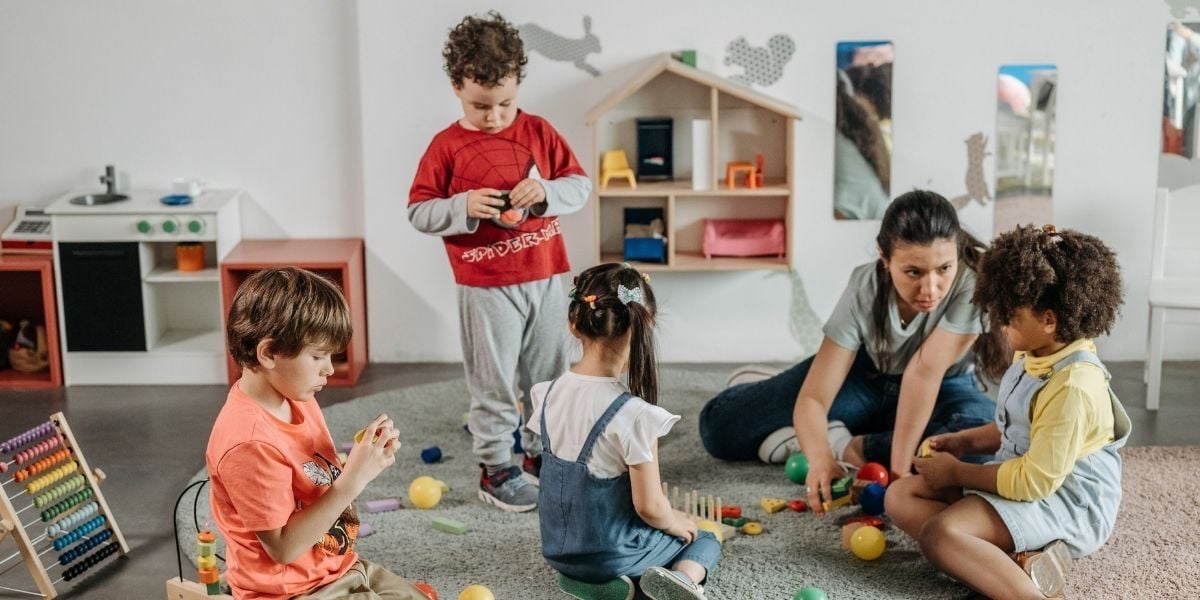
While TK is more of a bridge between preschool and kindergarten, preschool is an early learning environment that supports children’s development through play, exploration, social interaction, and teacher-guided activities, helping them prepare for school.
Preschool programs may vary by provider, but they should focus on helping children build foundational academic and social skills while encouraging curiosity and discovery.
Aside from focusing on different learning concepts, preschool programs also differ from TK in that they are offered through a variety of providers and settings — not just through the public K-12 education system.
However, even though preschool is more play-based, educators don’t just supervise children. Instead, quality preschool programs provide opportunities for children to develop socially, emotionally, physically, and academically through age-appropriate learning experiences.
There are many different preschool programs that exist, including:
-
Reggio Emilia
-
Waldorf
-
Montessori
-
HighScope
-
Parent cooperative
-
Bank Street
-
Faith-based
-
Ascend
What is TK?
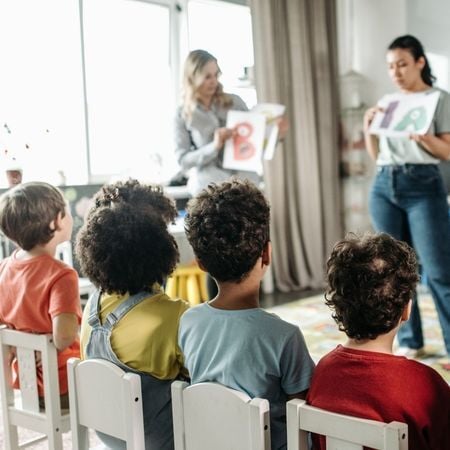
Transitional Kindergarten (TK) is a two-year kindergarten public school program for 4-year-olds that serves as an early entry point into the K-12 education system.
Originally designed as a bridge between preschool and kindergarten, TK helps children become familiar with classroom routines, school environments, and foundational learning experiences before entering kindergarten.
While the purpose of TK has changed since it was established in California in 2012, it is now intended to be a space where children are introduced to early literacy, math, social-emotional learning, and play-based learning.
Although it is often viewed as more academic than preschool, a quality TK program balances instruction with exploration, allowing children to learn through activities and play.
Some examples of activities that incorporate play-based learning with academic concepts include:
-
Painting or working with clay to develop creativity and fine motor skills
-
Using blocks to create towers to develop problem-solving skills
-
Acting out real-life situations, such as playing “house,” to develop social skills and language development
-
Playing rhyming or sound-based games to develop early literacy skills
Preschool versus TK: Four key differences
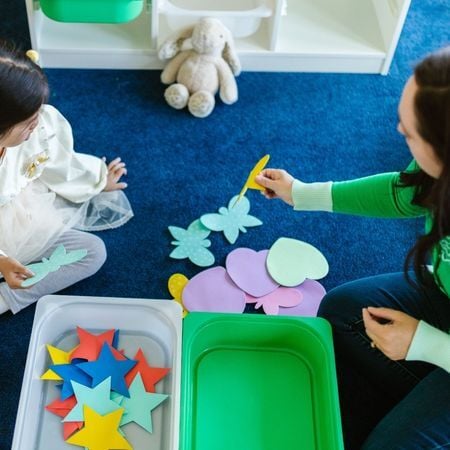
Now that you understand the basic definitions of preschool and TK, you may still struggle with seeing the core differences between the two programs.
Below, we will explore the main differences between preschool and TK, including eligibility, learning approaches, schedule and structure, and the purpose of each.
1. Purpose
Preschool
Preschool focuses more broadly on child development. Through play, social interaction, and hands-on experiences, children build confidence, curiosity, independence, and the foundational skills they will use throughout their educational journey.
TK
TK is designed to serve as an early entry point into the public school system. It helps children become familiar with classroom routines, group learning environments, and foundational skills before kindergarten.
2. Eligibility
Preschool
Since preschool programs are offered by a variety of providers, they have their own unique eligibility requirements. Depending on the program, children may be able to enroll at different ages and at different times throughout the year.
For example, if a child were to enroll in the preschool program offered at Options for Learning, they must be between the ages of 2 and 5, have a family income that meets state or federal eligibility guidelines, and live within the San Gabriel Valley service area.
TK
TK is a public school program with specific age requirements established by the State of California.
While the cutoff for TK has changed over the years in California, the current requirement is that children must be 4 years old by Sept. 1 of the year they are entering school. `
3. Learning approaches
Preschool
While some TK programs also incorporate play-based learning, preschool curricula generally rely entirely on it. In preschool, children learn through exploration, discovery, and interaction with their environment.
Rather than focusing heavily on academic instruction, preschool programs often encourage children to follow their interests while developing social, emotional, cognitive, and physical skills.
TK
TK is often viewed as more academically focused, with an emphasis on foundational literacy and math concepts. Children may be introduced to letters, sounds, rhyming, counting, sequencing, and other early learning skills that prepare them for kindergarten.
4. Schedule and structure
Preschool
Preschool schedules vary by provider. Families may find full-day, part-day, or extended-day options, as well as different classroom structures and educational approaches.
TK
Similar to kindergarten, TK typically follows a more traditional school model.
Because most programs are part of the public K-12 system, TK programs often follow district calendars, school schedules, and classroom structures. The TK school day is often shorter than a traditional school day, but this can vary by school and district.
Children become familiar with routines and expectations similar to those they will experience in kindergarten.
A common misconception: Preschool isn’t “just child care”
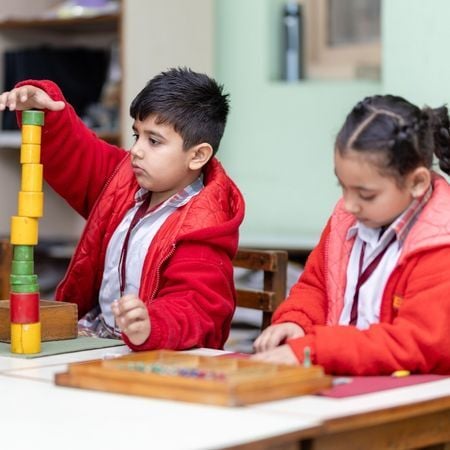
Parents often assume that preschool is simply daycare, which is why the State of California — and Options for Learning — is trying to change that narrative.
While child care is a place to play, preschool has a socialization component that is commonly overlooked.
Preschool programs offer so much more than just child care or a caring component. They are intentionally designed programs to support children’s social, emotional, physical, and cognitive development through a combination of play, exploration, and teacher-guided activities.
Which option is right for your child?
When it comes to whether your child should enroll in a TK program or a preschool program, there isn’t really a right answer. The “right” option depends on your child’s needs, your family’s schedule, and the type of learning environment you are looking for.
TK may be a good fit if:
-
Your child meets the age requirements for enrollment
-
You want an early introduction to the public school system
-
You are looking for a more structured, school-like setting
Preschool may be a good fit if:
-
You want a wider range of program options and schedules
-
Your child thrives in a play-based learning environment
-
You are looking for a program that focuses broadly on social, emotional, and developmental growth
-
You want a lower student-to-teacher ratio
What should parents do next?
Choosing between preschool and TK can feel overwhelming, but you don’t have to make the decision based on assumptions alone.
One of the best ways to determine which option is right for your child is to visit programs in person. Touring classrooms, meeting teachers, and observing the learning environment can give you a better sense of whether a program aligns with your child’s needs and your family’s goals.
As you explore your options, consider asking questions about:
-
The program’s daily schedule and routines
-
How learning is balanced with play and exploration
-
How teachers communicate with families
-
The program’s approach to social-emotional development
-
What support is available for children with different learning needs
Most importantly, remember that there is no single “right” path for your child! Whether your child attends TK or preschool, the goal is to find an environment where they feel supported, engaged, and excited to learn.
Still deciding between TK and preschool? Learn more about Options for Learning’s early learning programs and explore the options available for preschool and TK-age children.
Topics: