You’re busy with work and keep thinking about enrolling your child in a preschool program, but you’re overwhelmed with all the “what ifs.”
What if my child isn’t ready? How do I know? What if they start crying right when I drop them off? Will I even be comfortable leaving my child in a new environment without me?
At Options for Learning, we understand that you may have a lot of anxiety about enrolling your child in a preschool program – and we’ll be there with you every step of the way.
Founded in 1981, Options for Learning provides preschool programs and more for 11,000 kids every year in the San Gabriel Valley.
Whether you’re just getting started on your search or getting ready for the first day, we’re here to help answer all your preschool questions!
1. Is my child ready for preschool?
You may be doubting whether your child is even ready to begin in a preschool program – but they are.
Every child, ages 3 to 5, is already a learner. In fact, they already started learning from birth.
Children begin learning in the womb, and as infants and toddlers, interaction with the world around them helps them build crucial skills (National Institute of Health).
“I always make a point to tell the parents that they’re their [child’s] first teachers,” shares Monica Velasquez, Options for Learning's 2025 Teacher of the Year. “Their children have already learned with them, and preschool is just the next step in the process of their learning and being challenged.”
While your child is always learning, they also gain a lot of important knowledge in preschool, especially social skills.
Preschool programs focus on everything from a child’s emotional and physical well-being to learning how to be independent and socialize.
Additionally, kids start building a strong foundation of academic skills, such as learning letters and numbers.
Ultimately, the goal of preschool is to help kids get ready for kindergarten and succeed!
2. Is my child too young for preschool?
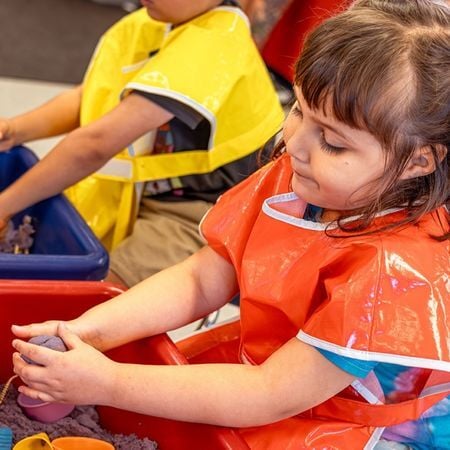
While different preschool programs, including Options for Learning, have their own age requirements, you may still wonder if your child is too young developmentally to start preschool.
The good news is that they are already learning every day, whether they are at home or enrolled in a program.
In preschool programs, including Options for Learning, teachers work with each child based on their unique needs and abilities, regardless of age.
For example, an early 3-year-old who is still learning how to separate from their parents may need more reassurance and support, while a 4- or 5-year-old may be ready for more advanced activities that build on their interests and prepare them for kindergarten.
“We know there are differences, so we would adapt our program to assist your child so that they would be able to be fine in our program,” teacher Monica explains.
3. Is my child too old for preschool?
Are you worried about enrolling your child in a preschool program at age 4 or 5? Don’t worry, it’s not too late!
If your child still meets a program’s age requirements, preschool can continue to challenge them and prepare them for kindergarten.
There will still be things your child hasn’t been exposed to throughout their life, and since they’re still young, their mind is absorbing everything.
At 4 and 5 years old, your child’s mind is really sprouting, and it’s important to lay many of the academic and social foundations in preschool that they will need for future success.
4. What should my child know before starting preschool?
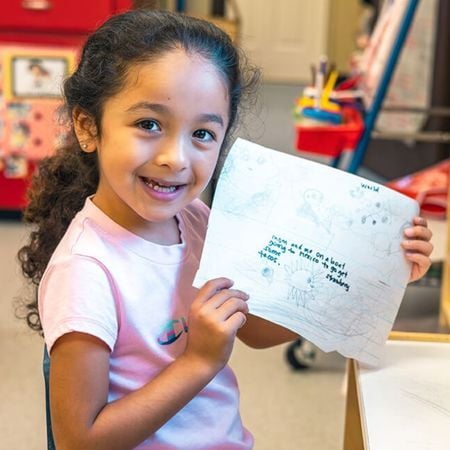
Your child doesn’t need to be a spelling whiz to start preschool! All they really need to start preschool is themselves, just as they are.
What it comes down to most of the time is a parent’s willingness to give their child an opportunity to gain more knowledge in school.
Any skill that a child doesn’t feel confident in quite yet can be developed in a preschool program.
For example, if you notice that your child is only saying three words, preschool teachers have the early intervention resources to put into action before they head off to kindergarten.
“That’s the beauty of it; they’re coming into a world that is all revolving around them, and they’re learning with other children a curriculum. That’s what we’re here for,” Monica said.
5. What if my child cries at drop-off?
We know it can be upsetting to see your child upset when you first drop them off at school, but they are in good hands.
In preschool programs, teachers understand that children have only been home, so it’s natural for them to cry when they leave their parents and enter a new environment.
That’s why it is so important for a teacher to make each child feel secure and at home.
To help the child feel more comfortable, families sometimes bring a family photo, favorite blanket, or tuffed animal.
In her Options for Learning classroom, Monica shared that she tries to be “open and honest” with parents before their child even starts preschool.
“I take my time to call the parents ahead of time to give them that reassurance, to give them what they can expect, and what I expect, and how we’re going to do this as a team to help the child, and for them to not be nervous,” she explained.
Monica also noted that she would “never let a child cry all day.”
“And they don’t. Within five minutes, they’re usually done crying,” she added.
Although your child may end up telling you they don’t want to keep going to school the next day, Monica urges all parents to continue bringing them, as the teachers will continue to keep supporting them.
6. How long does it take for children to adjust?
Each child is different, but many begin to feel more comfortable within the first days to a couple of weeks. Teachers treat all children as individuals, meet their needs, and provide a positive environment for as long as possible.
A teacher’s job is ultimately to build kids’ confidence and comfort so they feel more independent. No matter how long it takes, teachers are encouraged not to rush children, as everyone is going at their own pace.
7. What if my child is shy?
It’s definitely okay to send your child to preschool even if they are on the quiet side! Many children are, especially when they step into a new environment.
Your child will get comfortable in their preschool classroom at their own pace. The more they are around other children their age and in a learning environment, the more comfortable they will become each day.
“By the end of the school year, you’re going to see how your child blossoms!” Monica shared.
8. How do you keep children safe?
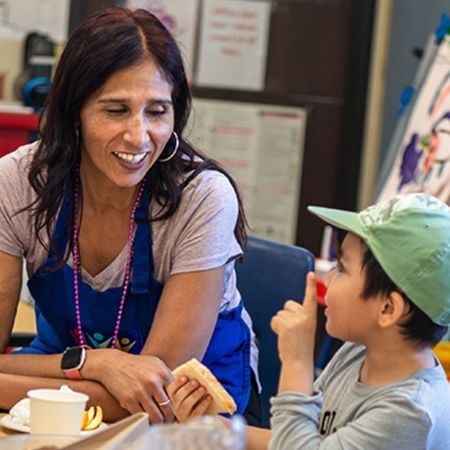 Your child’s safety is a teacher’s utmost priority.
There are many ways that teachers keep their classroom safe, including:
-
Reviewing expectations and rules at the start of the year in a way that children can understand (visuals are often used, such as books, songs, and picture cards)
-
Having a daily message board for families with highlights of the day, what’s to be expected, if there is a fire drill, there is a different teacher, etc.
-
Giving the children little jobs to help teachers and build confidence (setting the table for lunch, helping the teacher put away milk jugs, feeding the fish, etc.)
-
Getting to know a child’s individual interests to build a positive student-teacher relationship
-
Making sure that when children nap, teachers are in close proximity to foster more security
In a preschool classroom, it’s important for the teachers to really be attentive to each child’s needs and how they’re feeling.
9. How does preschool prepare children for kindergarten?
Even though your child is learning every day, preschool equips them with several important qualities they will need before they begin kindergarten.
-
Independence skills
-
Socialization (learning how to share, how to make friends, etc.)
-
Group cooperation
-
How to handle conflict
-
Daily structure and routines
-
Fine motor skills (using hands and fingers for drawing and building objects)
-
Spatial awareness (running, jumping, climbing, and moving through the classroom)
-
How to follow directions
“It’s not just babysitting because we provide a program filled with materials and a curriculum. We constantly support their interest,” Monica shared.
The structured routine and curriculum support your child on their journey to kindergarten.
10. Can preschool work with my family’s schedule?
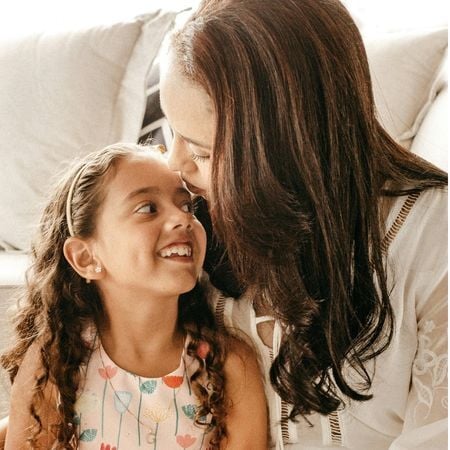
Even though your family’s schedule can vary with different work hours and availability, there are still preschool programs available for your needs!
Many preschool programs offer different schedules, including part-day, full-day, and year-round options.
Options for Learning specifically offers year-round preschool for eligible families, which means you don’t have to pay for a babysitter during the day or research summer camps. This benefits not only you but also your child.
Being in a year-round preschool program further boosts children’s confidence and makes it easier to expand their knowledge, even during the summer months.
Options for Learning specifically aims to make summer fun for kids through spirit days and activities.
For example, this past summer, children enrolled in the Options for Learning preschool learned about the ocean and water by experimenting with water tables and discovering what floats and doesn’t.
Interested in enrolling your child in preschool at Options for Learning?
Are you looking for an affordable preschool program for your child in the San Gabriel Valley? Options for Learning is here to support your family, no matter the circumstance.
To get started with the application process, we encourage families to complete a brief form, and one of our education advisors will be in touch within three business days.
If you have any more questions about Options for Learning’s preschool program, feel free to reach out at 626-699-8070. We want to help your child in the best way we can!
Topics: