
When it comes to finding the best-fitting early learning program for your child with special needs, we know that the search can seem overwhelming.
You want to find a program that is safe, supportive, conveniently located, and has the resources to be responsive and attentive to your child’s needs.
The term "special needs" can refer to a wide range of developmental, physical, behavioral, learning, or medical needs that may require additional support or accommodations in a child care setting.
Every child is unique, and support needs can vary widely from one child to the next, which is why looking for a program that works hand in hand with the child’s family is also important.
For the past 45 years, Options for Learning has continued to support 11,000 children in the San Gabriel Valley through inclusive early learning programs where every child is welcomed, supported, and encouraged to thrive.
In this article, you will learn:
-
Things to consider before searching for an early learning program for a child with special needs
-
Steps you should take when choosing an early learning program for a child with special needs
Quick Answer
To find the right early learning program for a child with special needs, start by seeking recommendations from trusted professionals, meeting with providers, reviewing references, and visiting programs in person.
Ask questions about inclusion, medical accommodations, communication, and staff experience.
Most importantly, look for a program that values partnership with families and is willing to support your child’s unique strengths and needs.
Things to consider before your search
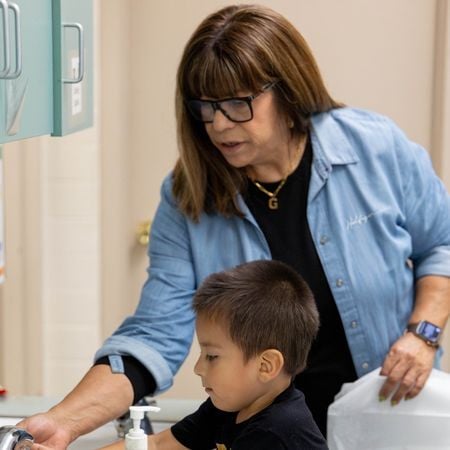 Before you head to Google to find the best early learning program for your child who may need extra support, there are some important considerations to help you feel more confident and prepared.
According to the California Department of Social Services website, parents should choose child care that meets basic requirements first, and then address their child’s unique needs with the provider.
After you identify providers that meet your basic requirements, here are some things to keep in mind as you evaluate which provider will be best for your child and family:
-
Share your child’s specific needs with the provider, as well as what's worked best at home for their success;
-
Be prepared to discuss any specialized procedures your child may need, such as nebulizer treatments, g-tube feeding, or finger-prick testing, and ask how the program supports those needs;
-
Don’t be surprised if your child acts differently in a child care setting versus at home (it’s completely normal!);
-
Remember that caring for a child with special needs involves having a positive partnership with the family, providers, and any specialists;
-
The Americans with Disabilities Act (ADA) requires child care programs to make “reasonable” efforts to accommodate a child with any disability.
As you meet with providers, come prepared with questions about staff qualifications and ratios, communication practices, therapy services, medical procedures, emergency protocols, financial support, and parent involvement.
Your goal is to find the most inclusive program for your child where they will thrive. A fully inclusive environment is one where:
-
Children with special needs are fully integrated, not separated
-
Staff use multiple ways to teach and communicate, like visuals and modeling
-
Teachers talk about children’s strengths first, not deficits
-
Classrooms show universal design features like visual schedules and flexible seating
-
Staff collaborate openly with families and specialists
-
The environment feels calm, predictable, and supportive
It may be a lengthy process, but it’s important to find a program that can accommodate your child and is willing to learn about their needs.
Steps to take when choosing an early learning program for children with special needs
 To begin your search, here are some helpful steps to take when choosing the best early learning program for your child:
1. Talk to a trusted professional or pediatrician
If you have access to a licensed professional or your child’s pediatrician, start asking questions about child care programs that they recommend. Oftentimes, they can connect you with great community resources near you that are a good fit for your little one.
Also, before your child is three and has or is at risk of developmental disabilities, you can get in contact with family resource centers, which will connect you with local early intervention programs in each county, per CDSS. Reach out to 1-800-515-BABY to get the number of your nearest family resource center.
2. Look for warm, responsive caregivers
When looking for a quality toddler or child care program for any child, having a quality provider who is warm and responsive is essential.
Research shows that warm and nurturing interactions are directly linked to children’s social competence and future academic success (PennState Extension).
Consequently, positive caregiving is the strongest predictor of quality for young children in child care settings.
Caregivers and providers help children feel safe, supported, and confident through consistent routines, positive relationships, and responsive care.
Aside from kindness and attentiveness, you may also want to look for caregivers who:
-
Have special training, skills, or experience with special needs children
-
Are willing to have a positive relationship with family members and the child’s specialists
-
Are willing to communicate regularly about the child’s development and be open about any concerns
-
Maintain confidentiality around others
-
Have a set system to record medication or any other procedures the child may need
3. Ask for references and look at reviews
Just like when you’re looking for restaurants or doctors, you'll want to do in-depth research on the child care provider that you are considering.
Reach out to any friends or family members who have attended the program, read or watch video reviews on YouTube or other social media platforms, and gather as much information as possible to make an informed decision.
4. Visit the site without your child first (then bring them later)
Whether it’s a classroom or someone’s home, you should visit the environment before bringing your little one.
Visiting on your own first can help you assess the environment and answer your questions before introducing your child to the space.
When visiting the environment, look for the following (recommended by the California Department of Social Services):
-
An accessible and safe facility for children that accommodates any adaptive equipment (e.g., wheelchairs, walkers, oxygen machines)
-
Toys and play materials that are within the child’s reach
-
Enough adults present to meet the children’s individual needs
-
An overall group size that is not too large and overwhelming
-
There is not too much or too little stimulation
Ultimately, you know your child best and what they would be comfortable with!
If you feel that the child care provider would be a good fit for your child, then bring them along.
You might be surprised at how they react to the staff and caregivers, the classroom materials, and other children.
Their reaction can help you decide whether to keep looking or try the program.
5. When you think you’ve found the right fit, start the child care program for a short amount of time and gradually increase
You've found the right fit! To get started, CDSS recommends that parents start bringing their child to the program or provider for a short period, such as an hour, and gradually increase the duration.
The more comfortable your child gets with the caregiver or provider, the longer you can increase your child's time there.
It will also give you more flexibility in determining whether the program is beneficial for your child or whether it’s time to reconsider other options.
What questions should you ask a provider?
 While you may now have a plan to look for an early learning program for your child, you may still be wondering which questions to prepare for or consider.
Questions surrounding inclusion, staff experience, communication, evaluations, health and medical needs, daily life, and support services will all help you determine whether a program is a good fit.
The goal isn’t to find a perfect program, but to find one that understands your child’s strengths, supports their needs, and partners with your family.
Some examples of questions to ask include:
-
How do you individualize support for children with different developmental needs?
-
What training or experience do staff have working with toddlers with special needs?
-
How do you communicate with families and collaborate with outside providers?
-
How do you support sensory needs, behaviors, and regulation?
-
How do you include children with special needs in all daily activities?
-
What would the first few weeks look like for my child?
Need help finding the right early learning program?
It can be overwhelming to search for a supportive program or caregiver, but you don’t have to navigate the process alone. The right place is out there for your child.
Remember that every child deserves a place where they feel welcomed, supported, and encouraged to grow. The earlier you get your child help, the earlier they can start building the skills that they’ll need for every aspect of their lives.
By asking thoughtful questions, visiting programs, and building strong partnerships with caregivers, you can find a setting that helps your child learn, grow, and thrive.
If you'd like to learn more about Options for Learning’s programs or resources available in your community, call 626-699-8070 to speak with an education advisor. We're here to help!
