

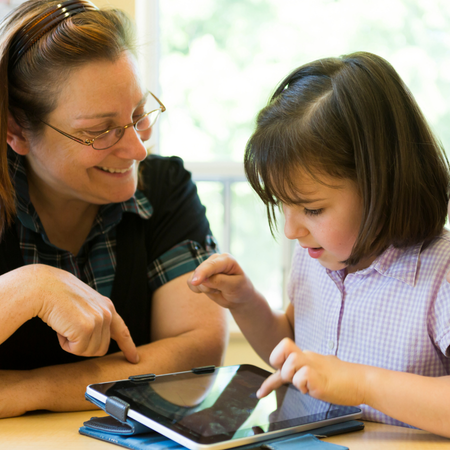
Handing your child a tablet or turning on a favorite TV show can feel like the easiest solution after a long day at work, but many parents end up asking the same question: how much screen time is too much?
While these new technologies have great benefits, they also have downsides, including leading children to struggle with more challenging behaviors and difficulty socializing.
The key is learning how to balance screen time and the activities children need to support their growth and development.
While there’s no official limit, experts suggest a break every 30 minutes and watching for mood changes after two to three hours a day.
For more than 45 years, Options for Learning has been providing early learning programs and resources to children and families throughout the San Gabriel Valley, including assistance with navigating screen time at home.
Read on to learn about:
What is the recommended screen time for toddlers and preschoolers?
 Just like adults, young children benefit from healthy boundaries and guidance regarding screen use.
According to the American Academy of Pediatrics, although it may be tempting to want to set a number of hours on screens that is “safe,” there isn’t enough evidence demonstrating a benefit from specific screen time limitation guidelines.
While the American Academy of Pediatrics notes that there is no universal screen time limit, it recommends that families “consider the quality of interactions with digital media and not just the quantity, or amount of time.” Parents are encouraged to use a framework called The 5 Cs of Media Use to determine if their child’s screen time is adding value to their child’s development.
The 5 Cs of Media Use for toddlers and preschoolers (ages 2 to 4)
1. Child: Who is your child? How do they react to media, and what are their motivations for using media?
2. Content: What is worth their attention?
3. Calm: How do they calm their emotions or go to sleep?
4. Crowding out: What does media get in the way of?
5. Communication: How can you talk about media to raise a media-savvy, responsible child?
Although there is no strict answer on how much screen time is appropriate, Dr. Anya Griffin, PhD, Director of Psychology at Children’s Hospital Los Angeles, previously shared that “after 30 minutes,” children should take a break.
“Children and teens have rapidly developing brains that need lots of different activities,” Dr. Griffin explained. “There’s also a risk of digital eye strain with excessive screen use. And if a child is engaged in more than two to three hours of screen time per day, we may see an impact on mood and stress levels.”
Signs that screen time may be becoming a problem for your toddler or preschooler
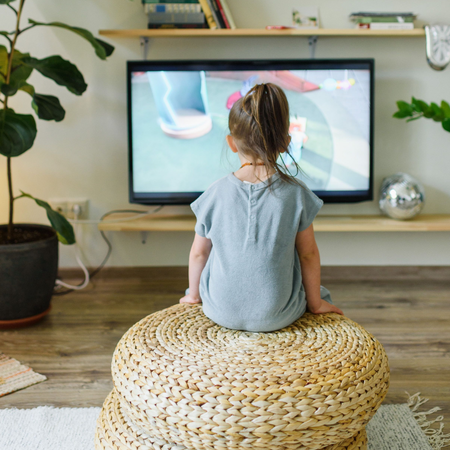 While some screen time can be educational and helpful for your child’s development, too much of it can have adverse effects.
In a 2023 study, researchers found that excessive screen time in children can lead to issues in:
-
Cognitive development (executive functioning, attention, problem-solving, and academic performance)
-
Language development (limiting opportunities for talking, asking questions, and practicing new words)
-
Social-emotional development (sleep difficulties, increased risk of anxiety and depression, challenges with emotional regulation, increased aggressive behaviors)
-
Physical health (less physical activity and greater risk of obesity)
Scholars urge parents to pay attention to whether screens are negatively affecting their child’s well-being. Here are certain signs that you can watch out for:
-
Difficulty controlling screen use or setting limits
-
Extreme irritability or frustration when screen time ends, or devices are unavailable
-
Reliance on devices for calming or entertainment (to the exclusion of other methods)
-
A loss of interest in other hobbies or activities previously enjoyed
-
Daytime sleepiness, poor sleep habits
If you notice any of these behaviors in your child, speak with a licensed professional or your pediatrician to help set screen time boundaries and ensure your child gets the right support they need. Families can also explore parenting resources and child development information from Options for Learning to learn more about healthy routines, behavior, and screen time habits.
It’s important to remember that screen time itself is not necessarily harmful. Factors such as content quality, parental involvement, a child’s age, and whether screens replace sleep, play, physical activity, or family interaction all influence how screen use affects children.
What media should your toddler or preschooler be watching?
Because screen time is such a big part of most of our lives now, you probably are left wondering what type of media is appropriate for your little one.
Evelin Rivera, a parent coach at Options for Learning, shared that ”there are a lot of things that children watch that are not age-appropriate.”
“A lot of young children know how to access Netflix and YouTube and access different videos that can be inappropriate,” she explained.
That’s why Evelin encourages parents to closely monitor and guide the content your child consumes. Some ways to help guide your choices include:
-
Choosing media that’s guided by child development specialists and teachers
-
Organizations like PBS rely on experts in early development to help them develop children’s media programming
-
-
Choosing “just right” media experiences
-
Choose age-appropriate media that reflect your child’s everyday lives and daily routines
-
-
Choosing screen-time experiences that use rich language and give children a chance to participate and respond
-
Media where characters speak directly to your child, ask your child questions, and label or explain new words or concepts
-
-
Sharing in the experience with your child
-
Ask them what they are interested in and talk with them as you watch or play
-
-
Choosing screen experiences that protect your child
-
Before you choose a screen experience, check out unbiased reviews (like Common Sense Media) and read the privacy policy for the game or app
-
Many games and apps don’t protect your child’s privacy and may expose them to inappropriate ads or content
-
Some popular TV shows that are age-appropriate for your toddler and preschooler are:
However, rather than focusing on finding the “perfect” show, parents should look for programs that encourage learning and curiosity, model positive social interactions, and support language development. Watching together and talking about what children see can also make screen time more interactive and meaningful.
What should families do instead of screen time?
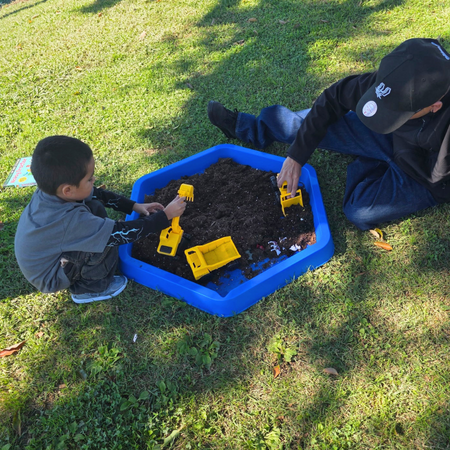 If you are looking for ways to help your child cut back on screen time, there are plenty of at-home activities they can do after school or childcare.
Evelin suggested finding simple activities that can keep children engaged while supporting their development and creating opportunities for family connection.
Some ideas include:
-
Working on puzzles
-
Coloring, painting, or drawing
-
Building with blocks or magnetic tiles
-
Playing board games such as Candy Land
-
Listening to music or singing songs
-
Playing outdoors
-
Completing a simple scavenger hunt
-
Engaging in imaginative play with dolls, stuffed animals, or toy vehicles
-
Helping prepare snacks or meals
-
Exploring sensory activities, such as water play, Play-Doh, or sensory bins
Families can also use learning activities as an opportunity to spend meaningful one-on-one time together while supporting their child’s development.
“We encouraged families to take 10 or 15 minutes out of their evening routine or even on the weekends to have that one-on-one interaction with their child,” Evelin said. “It’s important for children to have that connection with their parent. Just because they’re home doesn’t mean they should be put in front of a screen.”
What’s the next step for managing your child’s screen time?
While screen time can be a useful tool when used intentionally, children’s development is best supported by in-person play, conversation, movement, exploration, and meaningful interactions with caring adults.
The good news is that healthy screen habits don’t require eliminating screens altogether. Instead, families can focus on choosing age-appropriate content, setting consistent boundaries, and making sure screen time doesn’t replace sleep, play, physical activity, or family connection.
Now that you know what healthy screen use looks like, your next step is building routines that support your child’s overall development both on and off screens.
Read our article on “How to support your toddler’s social-emotional development at home,” which includes several helpful tips and ideas.
Looking for additional support? Explore Options for Learning’s programs to learn how quality early learning experiences help children build confidence, social skills, and healthy routines.
Frequently asked questions
Why does my child get upset when screen time ends?
Children often have difficulty transitioning away from preferred activities. Giving advance warnings, using a timer, and creating predictable routines can help make the transition away from screens easier.
What should I do if my child says they’re bored without a screen?
 Boredom isn’t always a bad thing. It can encourage children to use their creativity, explore new activities, and engage in independent play. Consider offering open-ended activities such as drawing, building with blocks, reading, or imaginative play.
Should screens be allowed during meals?
Many experts recommend limiting screens during meals when possible. Family meals can provide opportunities for conversation, relationship-building, and language development that children may miss when focused on a screen.
