


Play is an essential part of a child’s growing-up experience and development.
Think back to your memories growing up of playing pretend with friends, your favorite LEGO toys, or searching for ladybugs in the backyard. While it may seem like your child is simply playing, any form of play still exposes them to useful skills they’ll use throughout their life.
One type of play that supports early childhood development is sensory play, which encourages your child to engage all five senses, including touch, sight, sound, smell, and taste.
Keep reading to learn about:
-
Benefits of sensory play
What is sensory play?
 Sensory play includes play or activities that engage your child’s five senses — sight, touch, smell, taste, and sound.
Additionally, sensory play can engage two often-overlooked sensory systems: the proprioceptive and vestibular systems.
Our proprioception refers to awareness of one’s body and helps us know where body parts are relative to one another, while the vestibular sense helps our body maintain balance during activities. Together, these senses help children know where their bodies are in space and how to move safely and confidently.
Whether it’s playing with Play-Doh, searching for toy bugs in a sensory bin filled with chia seeds and water, or taking a bubble bath, children can engage their senses in ways you might not even realize.
“Babies, from when they are very little, are already using all of their senses to investigate and explore the environment,” Specialist Speech and Language Therapist Alys Mathers shared. “So it’s something that children naturally do without parents having to set it up. What we can do is make sure we allow and encourage our children to keep exploring using all their senses.”
All the benefits of sensory play
1. Language skills
While engaging in sensory play, children naturally build their language skills and learn new ways to communicate what they’re doing and how it feels, using new vocabulary to describe it.
As children participate in sensory play, they may interact with other children or adults, allowing them to practice communication skills such as talking, listening, and responding. For example, children may discuss textures, explain what they are building, or follow directions during a sensory activity.
Children who regularly engage in sensory play have 25-30% larger descriptive vocabularies compared to children with limited sensory experiences.
2. Fine and gross motor skills
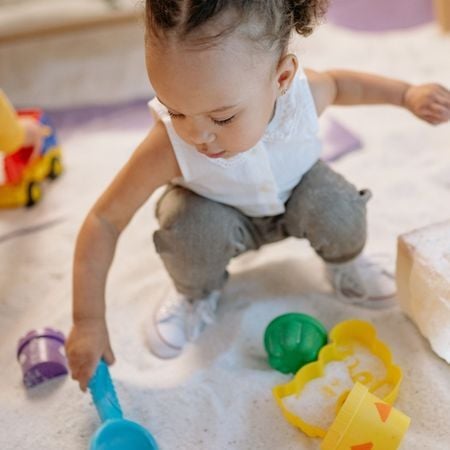
Fine motor skills are the tiny movements that people make with their hands, fingers, feet, and toes. These are skills we rely on to do everyday tasks such as holding a pencil, using scissors, folding clothes, typing on a keyboard, or even tying your shoe.
Meanwhile, gross motor skills are the large, sweeping motions we make with our arms, legs, and torso, such as bending over, raising our arms and hands, sitting, and crawling.
Sensory play allows children to develop both fine and gross motor skills by naturally repeating movements over and over again.
3. Cognitive growth
Cognitive development refers to the growth and changes in a child’s mental processes, such as attention, memory, perception, problem-solving, emotional regulation, and language acquisition.
“With sensory play, your child is working on problem-solving skills,” occupational therapist Suzanne Messer, MS, OTR/L, explained previously. “It encourages them to explore how to play and engage with different experiences as well as how to maneuver challenges they encounter, things like how to get rice from one container to another or how to stay balanced on a swing.”
For example, in a preschool classroom at Options for Learning, teacher Monica Velasquez guided her students through an activity in which they poured water into a water table and played with toys in it. The children had to figure out and experiment with how much water they could put into the table without it overflowing.
“I was watching one of our early three-year-olds the other day with the water table, and she just kept filling, filling. She kept looking at the net because the water kept coming through it,” Monica explained. “And I said, ‘Well, what do you think is happening? What can we do? What can we use differently?’ So then she found another cup, and she started exploring with that.”
Sensory tables, like the water table, also allow children to start making decisions at a young age and become more independent in the process.
4. Being able to calm down
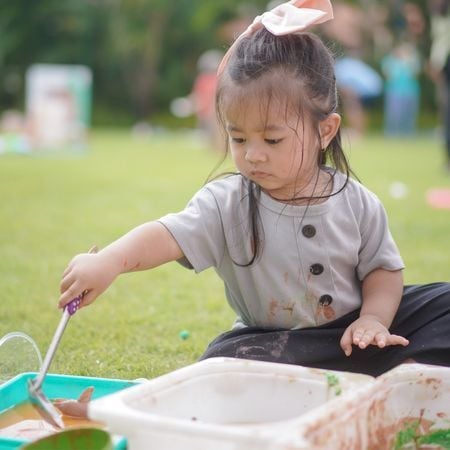 Have you noticed that when you are squeezing a stress ball, you start to feel more relaxed and calm? These kinds of repeated actions help someone relax at any age, including children.
When children engage in sensory play, it can help them better identify and calm themselves when experiencing intense emotions.
Things like a sensory bin or activity can also help your child refocus when they are feeling overwhelmed in the classroom.
Fun sensory activities for children
There are several fun, educational sensory activities for children to do in the classroom or at home. These are just some of the many sensory play ideas that you can try with your little one!
-
Bathtub activities (creating a mini ocean, foam bubbles, painting with water, toy car wash, etc.)
Looking for some more ways to support your child’s learning and development at home?
 Explore some simple ways to build your child’s social-emotional skills at home with this guide of helpful tips, including establishing predictable routines, naming, and validating emotions, modeling healthy coping skills, reading books about feelings, encouraging play, and providing opportunities to practice problem-solving and social skills.
Since 1981, Options for Learning has strived to create learning environments for children in the San Gabriel Valley that support growth and exploration while also providing resources for families, such as child care referrals, regardless of income.
Frequently asked questions
Is sensory play messy?
Sensory play can be messy, especially when children are first learning how to explore new materials. Over time, adults can help children understand expectations and boundaries, such as keeping sensory materials in a designated area. Families who prefer less mess can also try activities such as sensory bottles, Play-Doh, music, or water play with clear boundaries and supervision.
At what age can children begin sensory play?
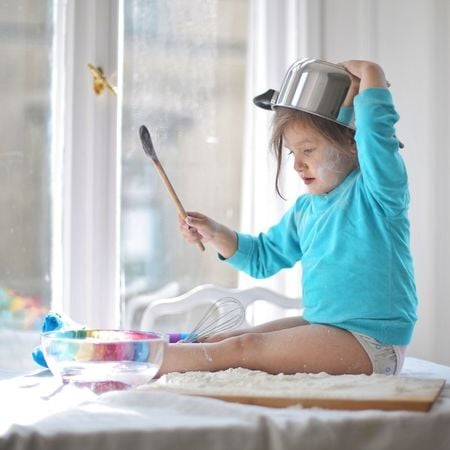 Sensory play can begin in infancy and continue throughout childhood. Babies, toddlers, and preschoolers naturally explore the world through their senses, and sensory activities can be adapted to their ages and developmental levels.
Do I need special materials for sensory play?
No. Many sensory activities can be created using everyday household items such as water, measuring cups, rice, cardboard boxes, Play-Doh, fabrics, or natural materials found outdoors.
