


Getting your toddler or preschooler to follow a bedtime routine at home can be challenging.
Maybe they get upset when you turn off the TV and say that it’s time for bed, or they just don’t want to go through the process of getting ready to go to sleep.
No matter the case, having a consistent bedtime routine you follow as a family every night can help your child feel more confident and calm before they head to bed.
For more than 45 years, educators in Options for Learning’s 161 classrooms throughout the San Gabriel Valley have helped children transition through routines, including meals, learning activities, rest time, and naps. These daily experiences reinforce the importance of consistency and predictability for young children.
Read on to learn about some helpful ways to create an easy and consistent bedtime routine for your toddler or preschooler, including:
1. Keep your child busy during the day
Do you find that your child seems to have even more energy at night than during the day?
Sometimes the key to having a successful bedtime routine is making sure your child has enough physical activity during the day so they feel tired enough to fall asleep at night.
Just like how you probably feel more exhausted after going to the gym or going on a run, your little one also needs to have that exercise during the day to have a quality night’s rest.
Previous studies have shown how children who are more active during the day fall asleep faster and sleep longer.
The physical activity guidelines for children ages 2 to 3 recommend:
-
Get at least 30 minutes of structured (adult-led) physical activity
-
Get at least 60 minutes of unstructured (active free play) physical activity
-
Do not be inactive for more than 1 hour at a time, except when sleeping
Some age-appropriate activities that toddlers can do to exercise include:
-
Walking like a penguin, hopping like a frog, or imitating other animals’ movements
-
Bending at the waist, touching the ground, and walking with your hands forward to inch along like a caterpillar
-
Sitting on the ground and letting your children step over your legs, or making a bridge with your body to let your children crawl under
-
Playing follow the leader
-
Listening to music and dancing
Meanwhile, the physical activity guidelines for preschoolers (ages 3 to 5) are:
-
Being physically active throughout the day for growth and development
-
Moving and engaging in both active play and structured (adult-led) physical activity
-
Activities such as jumping, hopping, and tumbling to strengthen bones
Some examples might include:
-
Playing games such as “Duck, Duck, Goose”
-
Kicking a ball back and forth or into a goal
-
Hitting a ball off a T-ball stand
-
Playing freeze tag
-
A treasure hunt
-
An obstacle course
-
Playing games with a soft ball (e.g., basketball, bowling, soccer)
2. Create an evening routine before bedtime
 You probably have a typical after-work or school routine that helps you wind down after a long day. Similarly, after your child arrives home from school or childcare, it can be helpful to have a more structured routine in place to help the transition to bed seem less stressful.
Instead of getting home and turning on the TV or using an electronic device, having a prepared activity, like a puzzle or a fun learning activity, ready for them to play while you are cooking or working can be helpful during busy weeks.
An evening routine might include:
-
Coming home and putting away backpacks and shoes
-
Having an afternoon snack and a family dinner
-
Spending time playing, reading, or completing homework
-
Taking a bath or shower
-
Cleaning up toys and getting ready for the next day
This evening routine can also give you opportunities to connect with your child one-on-one amid life’s chaos.
Options for Learning’s Parent Coaches encourage families to work together on calming activities such as puzzles, painting, or board games to spend quality time with their children, even when they themselves are tired.
3. Keep bedtime consistent
Although it’s sometimes easy to forget or let your child stay up later than usual on some nights, maintaining the same bedtime every night, even on weekends, can help children know what to expect and make bedtime easier.
A consistent bedtime supports healthy sleep habits for children while also providing the structure and predictability they need to feel secure.
In a 2024 study, researchers found that children who maintained a consistent bedtime routine and fell asleep at the same time each night exhibited better control of their emotions and behavior when under stress or working with others.
The National Sleep Foundation recommends different amounts of sleep and recommended bedtimes for children.
|
Age |
Recommended Amount of Total Sleep |
Recommended Bedtime |
|
Toddler (1-2 years) |
11 to 14 hours (including naps) |
6:00-7:30 p.m. |
|
Preschooler (3-5 years) |
10 to 13 hours (including naps) |
7:00-8:30 p.m. |
4. Use visual schedules
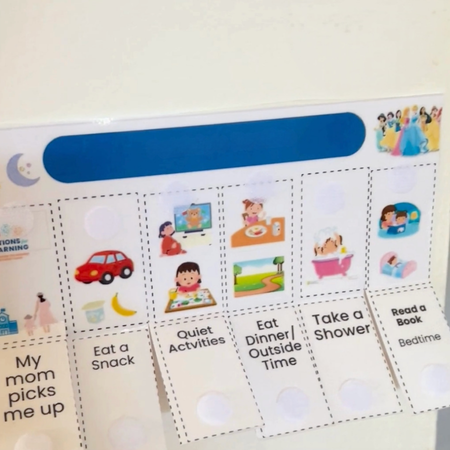 Having a visual chart with simple, step-by-step instructions for your child’s bedtime helps them develop their ability to follow directions and feel less stressed about the process.
For example, the first step could be putting away toys, followed by taking a bath, putting on pajamas, brushing teeth, reading a book, and getting into bed.
Visual schedules can be especially helpful for young children because they provide a clear picture of what is expected and what comes next, especially when they are still developing their language skills.
A visual schedule can also help build independence. As children become familiar with the routine, they may begin completing some of the steps on their own without needing as many reminders from adults.
Some tips for making a helpful visual schedule for your child may include:
-
Placing the schedule in a location that is easy for the child to see
-
Reviewing the entire schedule with your child
-
Pointing to the current activity/task and providing simple verbal directions (e.g., “It’s time to get your pajamas on”)
-
Making the visuals on the schedule removable with Velcro so the schedule can be modified
-
Providing positive reinforcement for following directions and completing tasks
5. Read a book or listen to soft music before bed
Although it can be tempting to turn on the TV or have your child play on a tablet to unwind, taking some time to read a book together or listen to soft music can help create a calmer transition into bedtime.
Research has found that communication-based bedtime activities, such as reading and singing, can support language development, literacy skills, and parent-child bonding while also promoting healthy sleep habits. Additionally, consistent bedtime routines that include reading have also been associated with longer nighttime sleep and improved sleep quality in young children.
Books not only help children learn and explore new ideas, but also allow you to bond with your child. For example, you can build a nightly routine of reading to them every night in bed, which helps them develop a sense of safety and predictability.
Some books families may enjoy reading before bed include:
-
Llama Llama Red Pajama by Anna Dewdney
-
Goodnight Moon by Margaret Wise Brown
-
The Going to Bed Book by Sandra Boynton
If your child is not interested in books, gentle music, singing songs, or listening to an audiobook together can provide a similar calming effect before bedtime.
Some families enjoy:
-
Traditional lullabies such as Twinkle, Twinkle, Little Star or Hush, Little Baby
-
Piano or instrumental music
-
Nature sounds such as rainfall or ocean waves
Your next step: Make bedtime part of a bigger routine
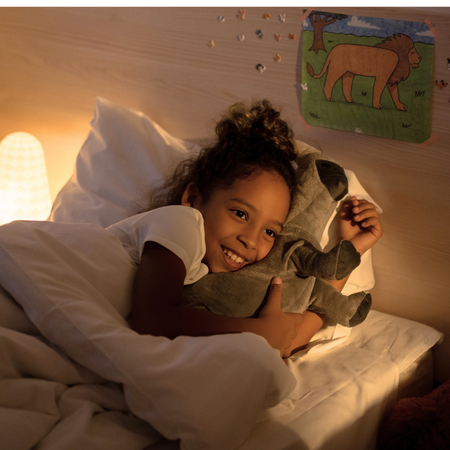 A successful bedtime routine is just one way to support your child’s development. Consistent routines can help children build confidence, independence, and healthy social-emotional skills. Continue learning with our article, “How to support your toddler’s social-emotional development at home,” for more simple strategies families can use every day.
Looking for additional support? Explore Options for Learning’s early learning programs and family resources.
Frequently asked questions
What if my child keeps getting out of bed?
Try to respond calmly and consistently. Gently guide your child back to bed and remind them that it is time to sleep. Children often test limits, but maintaining the same expectations each night can help them learn the routine over time.
What if our family’s schedule doesn’t allow for a perfect bedtime routine?
 That’s okay. The goal isn’t perfection. Even simple, predictable routines can help children feel secure and know what to expect. Reading a book, talking about the day, singing a song, or spending 10 to 15 minutes of focused time together can all become meaningful parts of a successful bedtime routine.
How long does it take for a new bedtime routine to work?
It can take time for children to adjust to a new routine. Some families may notice changes within a few days, while others may need a few weeks of consistency. The most important thing is to stick with the routine and provide gentle reminders as children learn what to expect.
