You may have heard some people toss around words like “Montessori” and “HighScope” when talking about different preschools, and thought, “What do they all mean?”
Over the years, educators have developed several educational philosophies for early learning programs.
However, with so many preschool options, it can be difficult to decide which program best fits your child’s and your family’s needs.
There’s no one-size-fits-all approach to preschool, but understanding the differences between programs and approaches can help you choose a preschool that matches your child’s learning style and your family’s goals.
For more than 45 years, Options for Learning has provided quality, affordable early-learning programs for children and families, including preschool classrooms, throughout the San Gabriel Valley.
Read on to learn about some of the most common preschool programs and educational philosophies, including:
-
Structured play-based curricula
-
HighScope
-
The Creative Curriculum
-
1. Play-based learning
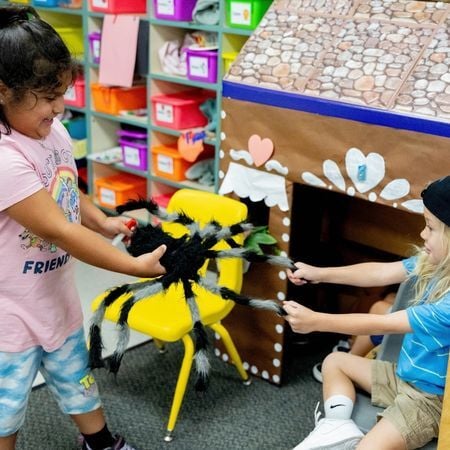 Play-based learning is a curriculum in which children learn content through play, whether freely, with teacher guidance, or in structured games. This type of learning approach allows children to build on their natural curiosity through experimentation, exploration, and problem-solving.
In a play-based classroom, children might spend part of their day building with blocks, creating art, exploring sensory materials, engaging in dramatic play, reading books, or participating in teacher-guided activities.
Teachers intentionally incorporate learning opportunities by encouraging conversation, introducing new vocabulary, asking questions, and helping children explore concepts related to literacy, math, science, and social-emotional development.
Monica Velasquez, a preschool teacher at Options for Learning, shared that children learn through play “by being curious and being able to investigate materials.”
“Everybody learns through play because you’re investigating materials, you’re working with things, you’re imitating, you’re using language. It’s a process,” Monica shared. “There’s no right or wrong. You’re not going to fail at it.”
While many people sometimes think that play-based learning is simply letting children play, research shows that this type of learning offers children far more than that.
A 2022 study concluded that play-based learning can have “a greater positive effect” on children’s development of important skills, such as math, shape knowledge, and task switching, compared to more traditional approaches that prioritize seat time and explicit instruction.
By keeping children actively engaged and having teachers who are responsive to their interests, children learn through play-based activities in a way that’s fun for them.
2. Montessori
Similar to the play-based learning philosophy, the Montessori educational approach was created by Maria Montessori, the first female physician in Italy, in 1907.
The Montessori method takes a child-centered approach to learning, in which children engage in self-directed, hands-on experiences that promote independent growth.
Sarah Dills, the director of Asheville Montessori School, explained previously how Montessori believes that “the development of a child is seen from the lens of the ‘whole child.’”
“Academic, social, emotional, and spiritual (not in a religious sense but more of a development of spirit or soul) developments have equal weight,” Dills said in an interview. “Montessori once said that ‘the education of even a small child, therefore, does not aim at preparing him for school, but for life.’”
Additionally, the American Montessori Society outlines some distinctive features of a Montessori program, including:
-
Classes are multi-age (typically 3-year age span)
-
Individual students follow their own interests while learning from others
-
Time is given to enable students to explore concepts while working toward individualized learning goals
-
Teachers serve as guides and mentors
-
Learning takes place across a variety of modalities: visual, auditory, tactile, etc.
3. Reggio Emilia
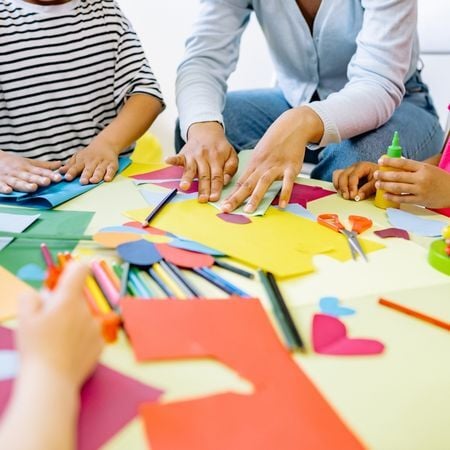 Developed by Italian educator Loris Malaguzzi, the Reggio Emilia learning approach emerged in Italy following World War II and continues to influence early childhood education programs worldwide.
The flexible, hands-on philosophy encourages children to express themselves and their interests in various ways while developing their personalities through a self-guided curriculum.
The Italian learning philosophy is founded on several beliefs:
-
Teachers collaborate with other teachers, specialists, administrators, and families to support children’s learning
-
Multiple educators may work with children throughout the day, allowing for greater observation and individualized support
-
Children explore ideas through hands-on experiences, art, and creative learning spaces
-
The classroom environment is intentionally designed to encourage curiosity, exploration, problem-solving, and independence
-
Teachers document children’s learning through photographs, conversations, and artwork
-
Learning experiences are built through collaboration between children, adults, and families
-
Families are viewed as important partners in education
“What children learn does not follow as an automatic result from what is taught; rather, it is in large part due to the children’s own doing, as a consequence of their activities and our resources,” Loris Malaguzzi wrote in his book, The Hundred Languages of Children.
4. Waldorf
Founded in the early 20th century, the Waldorf educational approach is based on the insights, teachings, and principles outlined by philosopher and activist Rudolf Steiner.
Steiner believed that education should address the “whole child,” or their physical well-being, social and emotional well-being, and their intellectual, cognitive, and spiritual development.
The Waldorf approach focuses on core concepts, including:
-
Experiential learning with project-based and collaborative approaches that allow students to retain material at a much higher level
-
A low-technology approach where children are instead encouraged to engage in imaginative play, hands-on work, and outdoor and artistic activities
-
Having the same teacher for several years fosters strong bonds and lasting relationships
-
Social and emotional education is prioritized, with formal testing introduced later on
In a 2024 study analyzing performance data from 16 Waldorf-inspired charter schools in California, researchers found that by middle school, Waldorf students were significantly more likely than their peers to meet or exceed state standards in English Language Arts (ELA) and math.
Waldorf ultimately seeks to promote learning through storytelling, projects, and experiments, emphasizing human interaction and the development of practical skills.
5. Structured play-based curricula
HighScope
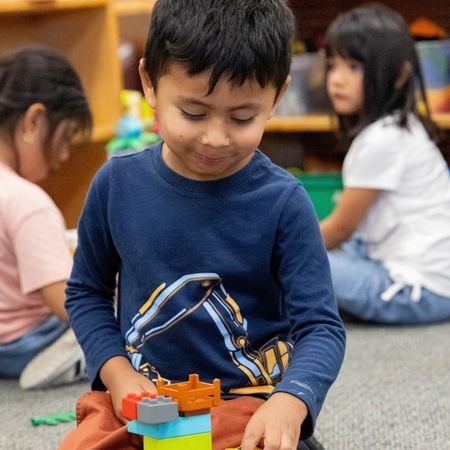 Founded in 1970 by psychologist David P. Weikart, HighScope is an educational approach that incorporates five key components:
-
Materials: Making sure a child’s home, culture, and language are reflected in a variety of age-appropriate materials for them to explore
-
Choice: Children can choose materials and whom they play with, as well as change and build on their play activities according to their interests and needs
-
Adult scaffolding: Children gain knowledge and develop creative problem-solving skills with the help of well-prepared adults who support a child’s current level of thinking
-
Manipulation: Children make discoveries when they are encouraged to handle, examine, combine, and transform materials and ideas
-
Child language and thought: Children communicate verbally and nonverbally, whether that be thinking about their actions, expressing their thoughts about what they understand, or modifying their thinking as they continue to learn
In a HighScope classroom, children typically plan what they will do, engage in the activity, and then come back together as a group to discuss what they did and what they learned.
A 2026 study found that high-quality teacher training based on the HighScope approach can improve children’s executive function development.
This approach helps children develop important skills such as planning, decision-making, problem-solving, and self-reflection.
The Creative Curriculum
Founded by early childhood education expert Diane Trister Dodge, The Creative Curriculum is an early childhood curriculum that builds children’s confidence, creativity, and critical thinking skills through hands-on, project-based investigations.
In a study of 180 classrooms using The Creative Curriculum, researchers found a significant increase in children’s social-emotional, language, cognitive, literacy, and mathematics skills. Additionally, 90% of teachers reported that The Creative Curriculum is easy to implement.
Six key factors of The Creative Curriculum include how it is:
-
Aligns with state early learning guidelines and the Head Start Early Learning Outcomes Framework
-
Nurtures the whole child
-
Builds early language and literacy skills
-
Develops math skills
-
Facilitates individualized instruction
-
Streamlines teaching through technology tools
6. Parent cooperative
Initiated in 1916 by a group of faculty wives at the University of Chicago, a Parent cooperative, otherwise known as a co-op preschool, is centered on community and family involvement. Usually, the preschool is administered and maintained by parents.
Parents are encouraged to give input, help plan the curriculum, learn about administration, participate in meetings, and discover ways to support their children at home.
Meanwhile, children participate in a supervised hands-on play environment with children of their own age. In addition to all of the equipment and materials being scaled to child size, children have the opportunity to interact with adults other than their own parents.
One major benefit of a co-op preschool is that parents and children can develop an extended family with friendships they carry through their lives, while remaining within the financial means of most families.
“While it’s not for everyone, that level of [parent] involvement allows for direct impact on a child’s education and builds community among like-minded parents,” mom Bryony Angell wrote in a 2026 article.
7. Faith-based
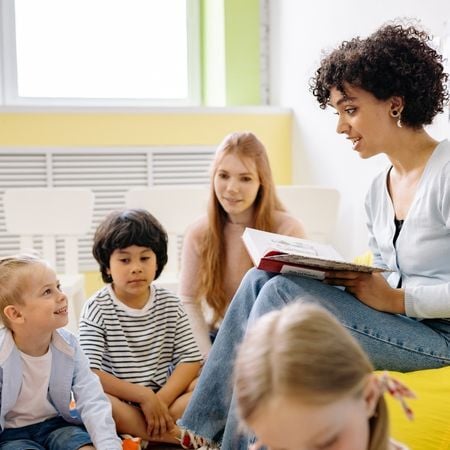 A faith-based preschool or early learning environment is usually operated by religious organizations such as churches, synagogues, and mosques, and often integrates spiritual values and teachings into its curriculum.
Depending on the school, children may be required to participate in activities such as prayers, chapel services, songs, or lessons that reflect the school’s faith tradition.
While some faith-based preschools welcome families from all backgrounds, others may have specific religious expectations. Families considering a faith-based preschool may want to ask about the school’s religious curriculum, family involvement, and how faith is incorporated into the daily schedule.
A December 2020 survey showed that the most important factors in choosing faith-based child care were the quality of caregivers, facility cleanliness, trust, providers’ values, a safe setting, and opportunities for cognitive development.
Next steps
After reviewing all your preschool options and touring different places, you may feel ready to enroll in a program. However, you might still be overwhelmed with questions about whether your child is even ready, what happens if they cry at drop-off, and whether you feel anxious about leaving your child in a new environment.
Options for Learning knows that these questions can feel never-ending, so we created a guide that answers some of the most common questions parents ask before their children start preschool.
No matter where you are in your journey, we want to meet your family where you are and help you feel confident about the next step!
Frequently asked questions
Which preschool philosophy is best for my child?
There is no single “best” preschool philosophy for every child. The right fit depends on your child’s personality, learning style, interests, and your family’s goals. Touring programs and observing classrooms can help you determine which environment feels right for your family.
Do most preschools follow just one philosophy?
 Not always. While some schools closely follow a specific philosophy, such as Montessori or Waldorf, many modern preschool programs combine elements from several approaches. For example, a program may incorporate play-based learning while also using aspects of Reggio Emilia or HighScope.
How do I know if a preschool is a good fit?
When touring a preschool, consider how teachers interact with children, whether the learning environment feels welcoming and engaging, how families are involved, and whether the program’s philosophy aligns with your family’s values and goals.
