There are six words that parents don’t want to hear: “Sorry, you are on the waitlist.”
This is especially true when you want to enroll your 4-year-old child in a transitional kindergarten (TK) program, but the school district says they don’t have room right now and aren’t sure when you’ll know.
Unfortunately, many families find themselves in this situation due to limited space. The good news is that there are other early learning options available.
Whether it’s enrolling in another nearby school district’s TK program, exploring an early learning program for TK-age children, or just building your child’s skills at home, your child can continue developing important life skills.
For more than 45 years, Options for Learning has supported children and families in the San Gabriel Valley through early learning programs that spark curiosity and foster growth. Along the way, we’ve helped many families explore their options when district TK programs were unavailable or at capacity.
Keep reading to learn more about what to do when your child doesn’t get into your school district’s (TK) program, including:
Why it happens
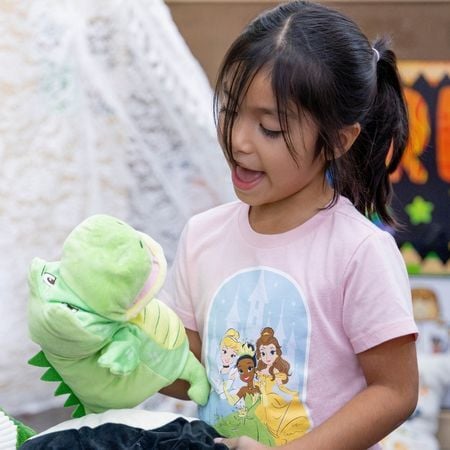 Established in California in 2012, TK is an optional two-year kindergarten program for 4-year-olds that serves as an early entry point into the K-12 education system.
While all California school districts that receive state funding are required to offer TK, not every elementary school in that district necessarily offers TK.
Additionally, another exception to the TK requirement is that “basic aid districts,” or school districts funded solely through local, rather than state funds, are not required to offer TK.
So, if you are calling the closest elementary school to your house and they say they don’t offer a TK program, it could be because that particular school doesn’t offer it, or you could be located in a basic aid district.
Another common reason a child may not receive a spot in a district’s TK program is that the program may be at full capacity. In these situations, some districts maintain waitlists or offer overflow placements at nearby schools with available space.
Since enrollment processes vary by district, families should contact their local school or district office for information about TK enrollment, waitlists, overflow placements, and transfer options.
While TK can be a valuable option, it is not the only option for families. There are also several other early learning programs and skills that families can practice at home.
Exploring other early learning programs for TK-age children
If your local school district is at capacity or doesn’t offer a TK program nearby, another option is to explore other early learning programs for your 4-year-old.
Preschool programs
Your child can still start or continue in preschool at age 4, and some programs serve children up to age 5.
Preschool is an early learning environment that supports children’s development through play, exploration, social interaction, and teacher-guided activities.
Like with TK, preschool helps children become familiar with classroom routines, school environments, and foundational learning experiences before entering kindergarten.
Children learn several important qualities in preschool, including:
-
Independence skills
-
Socialization
-
Foundational academic skills
-
Group cooperation
-
How to handle conflict
-
Daily structure and routines
-
Fine motor skills
-
Spatial awareness
-
How to follow directions
While different preschools have different fees, some families may be eligible for state-subsidized vouchers to cover the cost of care. Preschools also offer part-day and full-day schedules, determined by the provider.
Head Start
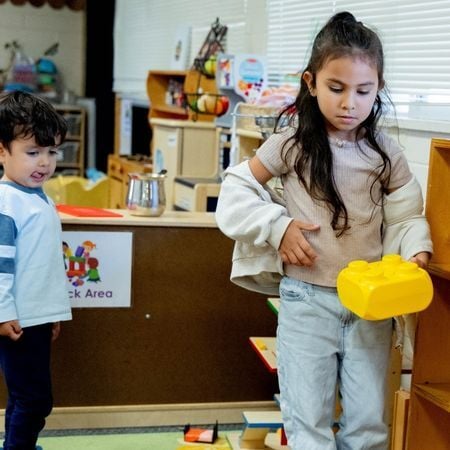 If you are looking for an affordable early childhood education program in California, the Head Start program could be a good option for your family.
Founded six decades ago, Head Start provides comprehensive services, including health, nutrition, and family support, to low-income children (ages 0-5) and their families.
Families could qualify for a Head Start program if:
-
The child is in foster care
-
The child is homeless
-
The family is receiving public assistance (e.g., Supplemental Security Income (SSI), CalWORKs, SNAP, KINSHIP Care)
-
The family’s income is below the poverty line
Other local early learning programs or charter school options
Families may also want to explore local charter schools. Like school districts, public charter schools are required to offer TK and may have openings when nearby district programs are full.
Other early learning programs also partner with school districts to have programs for TK-age children. For example, Options for Learning offers TK-age support in the San Gabriel Valley for 4- and 5-year-olds with a full-day, year-round schedule. Options for Learning’s program allows children to build strong foundations in literacy, math, and social-emotional skills, as well as essential life skills such as problem-solving, decision-making, and classroom routines.
In addition to Options for Learning, there are many other early childhood education programs in California that families can explore through the California Department of Education.
Ways to prepare for kindergarten at home
 Even though parents often feel pressure for their child to excel academically before entering kindergarten, there are no set guidelines on whether your child is ready. Kindergarten is meant to meet your child where they’re at.
“They are going to learn in kindergarten, and I think that parents feel pressured, and they think, ‘My child has to know this for kindergarten,’” Monica Velasquez, a preschool teacher at Options for Learning, said. “But I always try to tell them, the children are going to learn [in preschool], and when they get to kindergarten, they’re going to learn more.”
While there isn’t a specific checklist of skills children must master before kindergarten, there are many ways families can support learning and development at home, including:
-
Self-help and independence skills (playing independently, dressing and putting on their own shoes, packing their own backpack, brushing their own teeth, cleaning up after themselves, etc.)
-
Social-emotional skills (creating predictable routines, modeling healthy coping skills, reading books about feelings, celebrating efforts, etc.)
-
Communication skills (having conversations, asking questions, listening to stories, and expressing needs and feelings)
-
Early literacy and math concepts (reading together, identifying letters and numbers, counting everyday objects, and exploring patterns)
Families interested in learning more about what kindergarten readiness really means can explore our complete guide.
Exploring your early learning options for your 4-year-old?
For 45 years, Options for Learning has offered preschool and early learning programs for children and families in the San Gabriel Valley. These programs are designed to help your little one build confidence and school-readiness skills. Connect with one of our education advisors to learn more about the options available to your family.
Frequently asked questions
Will my child fall behind if they don’t attend TK?
No. TK is an optional program for families. Children can develop kindergarten-readiness skills through various early learning programs or at home.
What should I do if I’m unsure which option is right for my child?
 Start by considering your child’s needs and your family’s priorities. Factors such as learning style, schedule, location, and available supports can help guide your decision.
How do I know which early learning option is right for my child?
The best option depends on your child’s individual needs and your family’s priorities. Consider factors such as your child’s temperament, learning style, schedule, location, and the type of environment where they are most likely to thrive.
